Sweet America: 10 Traditional Desserts That Define U.S. Cuisine
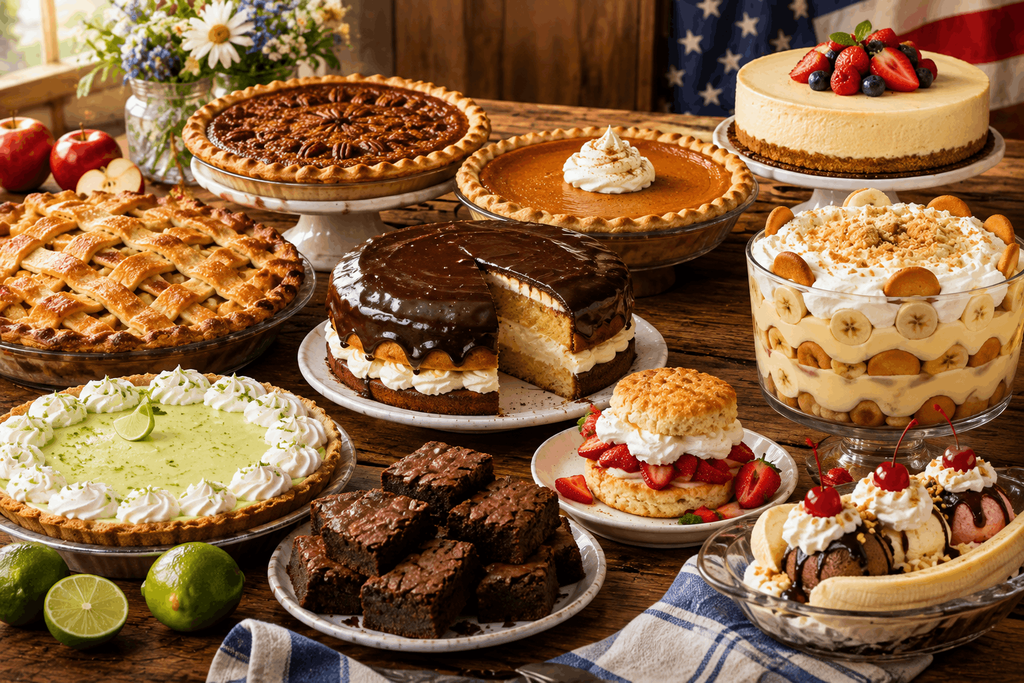
American desserts tell a story of migration, regional agriculture, family traditions, industrial food production, and celebration. From the familiar apple pie served at holiday tables to the rich pecan pie associated with the American South, these sweets reflect the many cultures and ingredients that have shaped the United States. There is no single dessert that represents every American community. Instead, the country’s dessert culture is made up of dozens of local specialties and recipes passed from one generation to another.
Many classic American desserts developed from European baking traditions, but they changed when cooks encountered new ingredients, different climates, and new social conditions. Native ingredients such as pecans, cranberries, blueberries, pumpkins, and corn became important parts of the American pantry. Immigrant communities also brought techniques for making cakes, custards, pastries, cookies, and frozen treats. Over time, these influences produced desserts that feel distinctly American even when their origins are international.
Below are ten traditional desserts that help explain the richness and diversity of U.S. cuisine.
1. Apple Pie
Apple pie is perhaps the most recognizable symbol of American dessert culture. The basic concept came to North America through European settlers, especially English, Dutch, and Swedish traditions. Early colonial cooks adapted pie-making methods to local conditions and to the apple varieties that became available as orchards developed.
The classic American version usually combines sliced apples, sugar, cinnamon, butter, and a pastry crust. Some recipes include nutmeg, lemon juice, raisins, or a crumb topping. A double-crust pie, with pastry covering both the bottom and top, became especially familiar in American homes.
Apple pie’s cultural meaning expanded during the nineteenth and twentieth centuries. It appeared in cookbooks, community gatherings, school events, and holiday meals. The expression “as American as apple pie” helped transform the dessert from a baked fruit dish into a symbol of national identity. Historians point out, however, that the recipe itself has deep international roots. Its American meaning comes from how it was adopted, adapted, and celebrated in the United States.
2. Pumpkin Pie
Pumpkin pie is closely associated with Thanksgiving and autumn. Its history reflects both European custard-pie techniques and the importance of squash and pumpkins in North American foodways. Indigenous peoples cultivated and used varieties of squash long before European colonization, and settlers gradually incorporated them into familiar cooking methods.
Modern pumpkin pie generally combines pumpkin puree with eggs, milk or cream, sugar, and warm spices such as cinnamon, ginger, nutmeg, and cloves. The filling is baked inside a pastry shell until it becomes smooth and softly set.
The dessert became strongly connected with Thanksgiving menus during the nineteenth century. Its color, aroma, and seasonal ingredients make it a natural centerpiece for fall celebrations. Although recipes differ, pumpkin pie continues to represent the relationship between American holiday traditions and agricultural seasons.
3. Pecan Pie
Pecan pie is one of the desserts most strongly associated with the American South. Pecans are native to North America and have long histories of use among Indigenous communities. The nut’s buttery flavor and texture make it especially suitable for pies, pralines, candies, and cakes.
Pecan pie typically combines pecans with eggs, butter, sugar, and a syrup or custard-like filling. Corn syrup became common in many twentieth-century recipes and helped popularize a glossy, sweet filling. Older versions used other sweeteners, including molasses and sugar-based syrups.
The dessert became increasingly prominent in Southern food culture during the late nineteenth and twentieth centuries. It is now frequently served at Thanksgiving, Christmas, and family reunions. The contrast between toasted nuts, soft filling, and flaky pastry gives pecan pie its distinctive appeal.
4. New York Cheesecake
New York cheesecake is known for its dense, creamy texture and rich dairy flavor. Cheesecake itself has ancient and European precedents, but the New York style developed through American restaurant culture and the availability of cream cheese.
Unlike lighter cheesecakes that may use ricotta or whipped ingredients, New York cheesecake generally relies on cream cheese, eggs, sugar, and a crust made from graham crackers or pastry. It is often baked slowly to create a smooth interior. Some versions are served plain, while others include fruit, chocolate, caramel, or sour cream toppings.
The dessert became closely associated with New York City’s restaurants and bakeries. Its reputation spread throughout the country, and it is now a standard option in diners, cafés, and celebratory menus. New York cheesecake demonstrates how a dessert can become identified with a city through commercial baking, restaurant traditions, and popular culture.
5. Banana Pudding
Banana pudding is a beloved Southern dessert built from simple ingredients: bananas, vanilla custard or pudding, cookies, and whipped cream or meringue. Early versions sometimes used sponge cake, but vanilla wafers became a practical and recognizable component during the twentieth century.
The dessert is usually assembled in layers. Slices of banana are placed between cookies and creamy pudding, allowing the textures to soften as the dish rests. Some cooks serve it immediately for a firmer cookie texture, while others chill it for several hours to create a soft, integrated dessert.
Banana pudding is often associated with church suppers, family reunions, potlucks, and Southern home cooking. It is inexpensive, easy to prepare in large quantities, and adaptable to different preferences. Its popularity shows how a simple dessert can become meaningful through community gatherings and family recipes.
6. Brownies
Brownies occupy a special place between cake and cookie. They are usually baked in a shallow pan and cut into squares or rectangles. Depending on the recipe, brownies may be fudgy, chewy, cakey, or filled with nuts and chocolate pieces.
The modern brownie is commonly linked with American baking in the late nineteenth and early twentieth centuries. One often-repeated origin story connects brownies with the Palmer House Hotel in Chicago, although the exact development of the dessert involved multiple recipes and evolving baking practices.
Brownies became popular because they were easy to portion, transport, and serve. They fit school bake sales, lunch boxes, picnics, office gatherings, and family celebrations. Their basic formula also invites experimentation with espresso, peanut butter, caramel, mint, dried fruit, and different types of chocolate.
7. Key Lime Pie
Key lime pie is closely connected with the Florida Keys. It traditionally uses the juice of small Key limes, sweetened condensed milk, and egg yolks in a crust. The filling is tangy, creamy, and lighter in flavor than many heavy chocolate or nut desserts.
The dessert reflects the ingredients and food conditions of South Florida. Sweetened condensed milk was useful in areas where fresh dairy was not always easy to obtain, while limes provided strong acidity and distinctive aroma. Graham-cracker crusts became common in many modern versions.
Key lime pie is now served throughout Florida and beyond. Some recipes use regular Persian limes because authentic Key limes can be difficult to find. This substitution changes the flavor slightly, but the dessert remains recognizable through its tart filling and creamy texture.
8. Strawberry Shortcake
Strawberry shortcake combines sweet biscuits or sponge cake with fresh strawberries and whipped cream. It is especially popular during spring and summer, when strawberries are abundant and flavorful.
The dessert reflects the American preference for combining baked goods with fresh seasonal fruit. Shortcake recipes vary considerably. Some use crumbly biscuits, while others use soft sponge cake or angel food cake. The strawberries may be lightly sweetened to release their juices, which soak into the cake or biscuit.
Strawberry shortcake is often served at picnics, garden parties, family dinners, and community celebrations. Its bright color and simple preparation make it both attractive and accessible. It also demonstrates how American desserts frequently depend on seasonal produce rather than complicated techniques.
9. Boston Cream Pie
Despite its name, Boston cream pie is a cake rather than a traditional pie. It generally consists of yellow sponge cake filled with pastry cream and finished with a chocolate glaze. The dessert is associated with Boston’s Parker House Hotel and became an important part of the city’s culinary identity.
The name reflects an earlier period when the words “cake” and “pie” could be used more flexibly than they are today. The contrast between light cake, smooth custard, and glossy chocolate makes Boston cream pie distinctive.
Its popularity illustrates how hotels and restaurants helped spread regional specialties. A dessert created or promoted in a particular city could become known nationally through cookbooks, tourism, and commercial baking.
10. Banana Split
The banana split is a classic American ice-cream dessert traditionally made with a banana cut lengthwise and served with several scoops of ice cream. Chocolate, strawberry, or pineapple sauces are often added, followed by whipped cream, nuts, and a cherry.
The dessert is commonly associated with an early twentieth-century Pennsylvania pharmacy-soda-fountain tradition. It reflects the rise of ice-cream parlors and drugstore counters as social spaces where customers could enjoy elaborate sweets.
The banana split became popular because it was visually dramatic and easy to customize. Different ice-cream flavors, toppings, sauces, and nuts allow each serving to be personalized. Its presentation also helped make it a memorable part of American popular food culture.
What These Desserts Reveal About American Cuisine
These ten desserts share several important characteristics. First, many are adaptations rather than isolated inventions. American cooks borrowed techniques from Europe, incorporated Indigenous ingredients, learned from African and African American food traditions, and responded to regional agriculture. The resulting dishes developed their own identities over time.
Second, American desserts often connect food with events and social occasions. Pies appear at Thanksgiving and family gatherings. Banana pudding is common at potlucks. Brownies travel well to school and community events. Ice-cream desserts are linked with diners, pharmacies, and casual celebrations. These settings help recipes survive because people associate them with memories and relationships.
Third, convenience has shaped dessert culture. Refrigeration, canned milk, packaged cookies, commercial chocolate, prepared pie crusts, and boxed mixes made traditional desserts easier to reproduce. Industrial food production did not eliminate homemade cooking; it gave households new ways to save time and create familiar flavors.
Finally, American dessert culture is regional. Pecans connect certain pies with the South, Key lime pie reflects Florida’s environment, Boston cream pie is linked with Massachusetts, and New York cheesecake carries the identity of a major urban food center. At the same time, these desserts have traveled far beyond their original locations.
Conclusion
Sweet American cuisine is defined not by one recipe but by a wide collection of desserts shaped by history, migration, agriculture, technology, and family tradition. Apple pie, pumpkin pie, pecan pie, cheesecake, banana pudding, brownies, Key lime pie, strawberry shortcake, Boston cream pie, and the banana split each tell a different story.
Together, they show how American food culture turns familiar ingredients into dishes with strong regional and emotional meaning. Whether served at a holiday dinner, a diner counter, a church gathering, or a summer picnic, these desserts continue to connect people with place, memory, and celebration. Their enduring popularity comes from their ability to evolve while remaining recognizable—a quality that makes them an important part of the American culinary story.
Editorial note: Historical descriptions are presented as a general culinary overview. Individual desserts often have multiple origin stories and regional variations.
Leave a Reply