12 Regional Foods That Show the True Diversity of American Cuisine
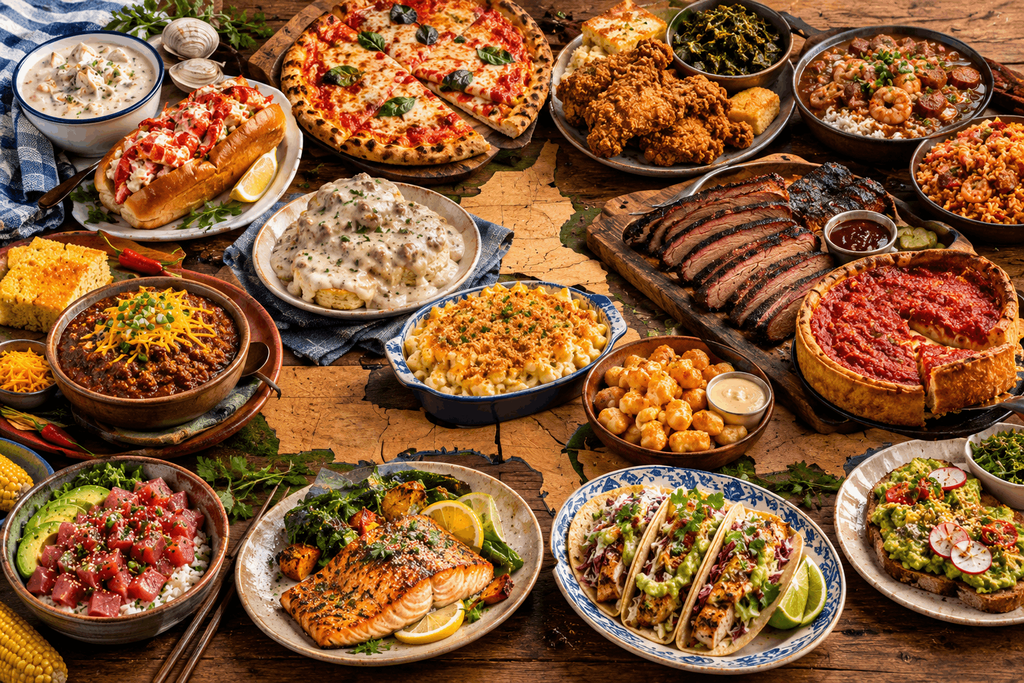
American cuisine is often represented by a short list of familiar foods: hamburgers, hot dogs, fried chicken, and apple pie. These dishes are important, but they do not tell the whole story. The United States is a large country shaped by Indigenous foodways, migration, agriculture, regional climates, trade, and generations of cultural exchange. As a result, American food is not one uniform tradition. It is a collection of regional cuisines, each with its own ingredients, techniques, histories, and meanings.
From the seafood traditions of New England to the rice-based dishes of Louisiana and the Pacific flavors of Hawaii, regional foods reveal how communities adapt food to place. The following twelve dishes offer a flavorful introduction to that diversity.
1. New England Clam Chowder
New England clam chowder is strongly associated with the northeastern coast, where shellfish and maritime work influenced local cooking. The classic version is usually creamy and includes clams, potatoes, onions, and sometimes salt pork or bacon. Its richness makes it particularly comforting during cold weather, while the clams connect the dish to the Atlantic coastline.
Chowder also demonstrates how regional food develops from available resources. Coastal communities had access to shellfish, while dairy, potatoes, and preserved pork helped create a filling meal. Today, recipes vary from home to home, but the combination of briny seafood and creamy broth remains recognizable.
2. Louisiana Gumbo
Gumbo reflects the complex cultural history of Louisiana. Its traditions include influences from West Africa, France, Spain, Native American communities, and the Caribbean. Depending on the recipe, gumbo may contain seafood, chicken, sausage, okra, tomatoes, or a dark roux. It is commonly served with rice.
The dish is not defined by one fixed ingredient list. Instead, gumbo represents adaptation and layered culinary knowledge. Okra connects some versions to African foodways, while roux and other techniques show European influence. Regional and family preferences determine whether a gumbo is thick, brothy, spicy, seafood-focused, or meat-based.
3. Texas-Style Barbecue Brisket
Texas barbecue is known for its emphasis on beef, especially brisket, and for the use of smoke, salt, pepper, and carefully controlled heat. Pitmasters may cook brisket for many hours, allowing connective tissue to soften and creating a dark exterior bark.
The traditions surrounding Texas barbecue also reflect ranching, Central European immigration, African American culinary knowledge, and communal gatherings. Different parts of Texas favor different approaches, including variations in wood, seasoning, sauce, and serving style. Brisket is therefore more than grilled meat; it is a method, a social practice, and a regional identity.
4. Southern Fried Chicken
Southern fried chicken is associated with crisp seasoned coating, juicy meat, and a wide range of family recipes. Its history includes African, European, and Indigenous influences, as well as the labor and creativity of African American cooks. Techniques involving seasoning, frying, and careful temperature control developed in many kitchens over generations.
Fried chicken may be served with biscuits, greens, mashed potatoes, cornbread, or gravy. It can appear at Sunday dinners, picnics, celebrations, and restaurants. The dish illustrates how food can carry both everyday familiarity and deep historical significance.
5. Chicago Deep-Dish Pizza
Chicago deep-dish pizza differs from thin-crust styles through its tall edge, substantial filling, and layered construction. The crust is often buttery or pastry-like, while cheese, toppings, and tomato sauce are arranged in a way that helps protect the cheese during the longer bake.
The dish developed in an urban environment shaped by migration and restaurant entrepreneurship. It is frequently served in slices that are closer to a complete meal than a light snack. Chicago pizza shows how a familiar food can be transformed to match local preferences and expectations.
6. New York-Style Pizza
New York-style pizza is commonly recognized for its broad, foldable slices, thin but structured crust, tomato sauce, and melted cheese. Its development is closely connected to Italian American communities and the city’s fast-paced street and neighborhood food culture.
Water, flour, fermentation, oven design, and serving habits all influence the final product. While debates about the ideal slice are common, New York pizza is best understood as a living tradition that continues to change through independent pizzerias, immigrant communities, and modern culinary experimentation.
7. Appalachian Biscuits and Gravy
Appalachian food traditions often emphasize practical cooking, preserved ingredients, grains, beans, and dishes that can feed a household economically. Biscuits and gravy combine a tender baked biscuit with a savory sauce, often made from sausage, milk, flour, and black pepper.
The dish reflects the region’s history of European settlement, Indigenous ingredients, and African American influence. It is frequently associated with breakfast, but its appeal goes beyond a particular time of day. It represents resourcefulness and the ability to turn basic pantry ingredients into a satisfying meal.
8. Kansas City Barbecue
Kansas City barbecue is famous for its wide variety of smoked meats and its sweet, tangy, often tomato-based sauce. Pork ribs, burnt ends, sausage, chicken, and beef may all appear on a barbecue menu. The style developed through a mixture of regional meat traditions, migration, and urban barbecue culture.
Unlike traditions that emphasize sauce sparingly, Kansas City barbecue often treats sauce as an important part of the finished flavor. The result is a style that balances smoke, sweetness, acidity, spice, and caramelization.
9. Hawaiian Poke
Poke, particularly in its traditional Hawaiian forms, is built around seasoned raw fish, often ahi tuna, combined with ingredients such as sea salt, seaweed, and kukui nut. Contemporary versions may include soy sauce, sesame oil, onions, avocado, or other toppings, but these modern bowls should not obscure the dish’s Native Hawaiian roots.
Poke demonstrates the relationship between island environments and food. Fresh seafood is central, while seasoning and preparation reflect local knowledge. Its global popularity has also created questions about authenticity, adaptation, and how traditional foods are represented outside their original communities.
10. Pacific Northwest Salmon
Salmon is deeply important to many Indigenous communities of the Pacific Northwest, where it has long been connected to food security, ceremony, trade, and cultural identity. Preparation methods vary and may include grilling, roasting, smoking, or drying.
Modern restaurants often serve salmon with seasonal vegetables, grains, or sauces, but the ingredient’s significance reaches beyond contemporary menus. Learning about salmon cuisine also means recognizing Indigenous stewardship, river ecosystems, and the cultural importance of fishing traditions.
11. Southwestern Chili and Green Chile Dishes
The American Southwest has a rich food culture shaped by Indigenous, Mexican, Spanish, and later immigrant traditions. Chili, green chile stews, enchilada-style dishes, and beans demonstrate the importance of corn, peppers, tomatoes, squash, and slow cooking.
Recipes vary widely across New Mexico, Arizona, Texas, and neighboring areas. Some preparations emphasize red chile, others green chile, and some combine both. The region’s food shows how borders, migration, agriculture, and language influence the development of culinary identity.
12. Midwestern Cheese Curds and Comfort Food
The Midwest is often associated with dairy farming, grain production, casseroles, potlucks, and practical family meals. Cheese curds, particularly in Wisconsin, are a recognizable regional specialty. They may be eaten fresh, seasoned, or battered and fried.
Midwestern cuisine also includes dishes such as hotdish, butter burgers, sweet corn, and various baked desserts. These foods reflect agricultural abundance, community gatherings, and a culture of sharing. Their simplicity is part of their appeal, but their regional character is equally important.
Why Regional Food Matters
These twelve foods show that American cuisine is shaped by more than geography alone. Food traditions emerge through relationships between people, land, labor, migration, technology, and memory. A coastal dish may depend on seafood, while an inland meal may be built around grains, dairy, or preserved meat. Yet no region exists in isolation. Recipes travel, ingredients move through trade networks, and communities continually influence one another.
Food history also requires attention to whose contributions have been recognized and whose have been overlooked. Indigenous peoples, African Americans, immigrants, women working in domestic kitchens, farm workers, fishermen, and restaurant workers have all helped shape American food. Regional dishes are therefore cultural records as well as meals.
Conclusion
The diversity of American cuisine becomes clearer when we look beyond nationally marketed foods and explore regional specialties. New England chowder, Louisiana gumbo, Texas brisket, Southern fried chicken, Chicago and New York pizza, Appalachian biscuits, Kansas City barbecue, Hawaiian poke, Pacific Northwest salmon, Southwestern chile, and Midwestern cheese curds each tell a different story.
Together, they reveal an American food culture that is varied, constantly changing, and deeply connected to history. Trying regional foods is not only a way to discover new flavors; it is also an opportunity to learn how communities express identity, preserve memory, and respond creatively to the places they call home.