The Story Behind America’s Favorite Mac and Cheese
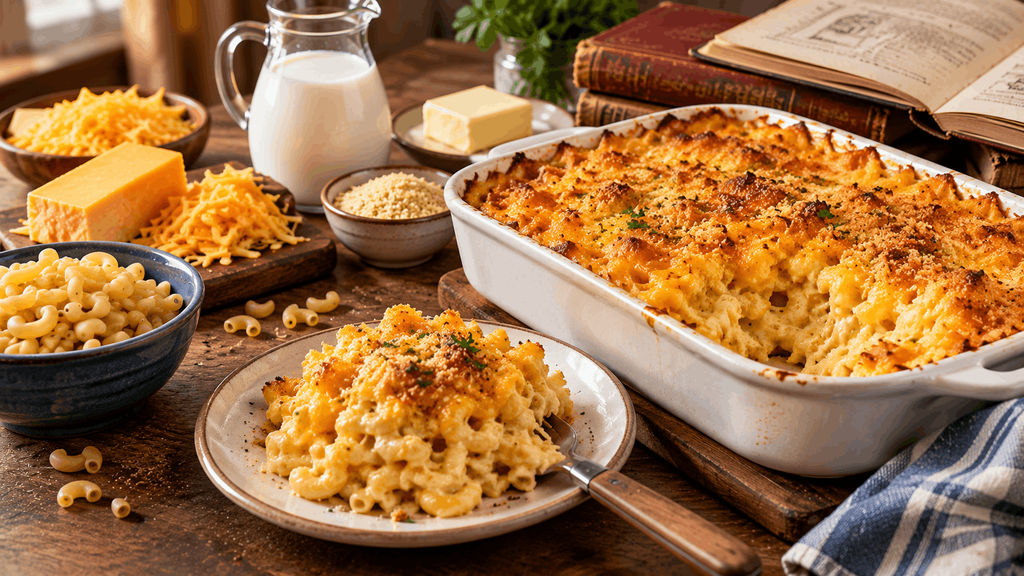
Few dishes are as closely connected to comfort, family, and everyday American food culture as macaroni and cheese. Made from simple ingredients such as pasta, cheese, milk, butter, and seasonings, mac and cheese can be inexpensive and quick, yet it can also become a rich centerpiece for holidays and celebrations. Its popularity comes from its flexibility, familiar flavor, and ability to adapt to different communities and generations.
Although mac and cheese is widely viewed as an American classic, its story reaches back to European cooking traditions. Cooks in Europe prepared pasta with cheese long before the dish became common in the United States. Different recipes combined cooked pasta with butter, cheese, cream, or breadcrumbs. Some versions were baked, while others were served directly from the pot. There was never just one original recipe, and this variety helped the dish evolve over time.
The American connection is often associated with Thomas Jefferson, who encountered pasta dishes during his travels in Europe. Historical accounts indicate that macaroni was served at a state dinner connected with Jefferson in 1802. However, the story should not be reduced to one famous individual. Enslaved cooks and household workers played major roles in preparing and adapting food in early America. James Hemings, an enslaved chef who trained in French cooking, is frequently mentioned in discussions of the culinary traditions surrounding Jefferson. His story highlights how the development of American cuisine involved people whose contributions were not always properly recognized.
During the nineteenth century, macaroni became more available in American households. Cookbooks began to publish recipes that combined pasta with cheese, butter, milk, or a white sauce. These early dishes were not always as creamy as modern versions. Some resembled a baked casserole or a firm pasta pudding. The final result depended on the kind of cheese available, the cooking method, and the equipment in the kitchen.
As food distribution and manufacturing improved, mac and cheese became easier for ordinary families to prepare. Cheese was still influenced by local availability and cost, but packaged pasta and widely circulated recipes made the dish more practical. It could be served as a main meal when budgets were limited or as a side dish during larger gatherings. Its neutral base also made it easy to season according to household preference.
The development of processed cheese introduced another major change. Traditional cheese could be difficult to store and might separate when heated. Processed cheese products were designed to be more stable and consistent. They melted easily and helped create a smooth sauce. This technology supported the growth of convenient cheese-based meals and made it easier for manufacturers to produce mac and cheese on a large scale.
In 1937, Kraft introduced a boxed macaroni and cheese product that became a major part of American grocery culture. The product offered a low-cost, shelf-stable meal that could be prepared quickly. During economically difficult periods, convenience and affordability were especially important. Dried pasta and powdered cheese allowed households to keep a reliable meal in the pantry without purchasing fresh ingredients every time.
Boxed mac and cheese also became associated with childhood memories. Many people remember preparing it after school, eating it as a quick lunch, or sharing it with siblings. The flavor is familiar and predictable, which is one reason the product remains popular even when consumers also enjoy more elaborate homemade versions.
Homemade and boxed mac and cheese represent different experiences rather than simply two levels of quality. Homemade recipes offer control over the ingredients and texture. Cooks can choose sharp cheddar, mild cheese, smoked cheese, Monterey Jack, pepper jack, or a mixture. They can add mustard, paprika, garlic, black pepper, hot sauce, or herbs. Some recipes use a flour-and-butter roux, while others use evaporated milk, eggs, cream cheese, or processed cheese.
Baked mac and cheese usually has a firmer texture and a browned top. Breadcrumbs may be added for crunch, while extra cheese creates a golden crust. Stovetop mac and cheese is often softer and creamier, making it suitable for quick weekday meals. Both methods are deeply familiar in American cooking, and families often develop their own preferred version.
The dish also has important regional and cultural connections. In many African American households and Southern food traditions, baked macaroni and cheese is associated with holidays, reunions, Sunday meals, and hospitality. It may be served with greens, fried chicken, barbecue, cornbread, or other traditional foods. In these settings, the dish can represent family knowledge and continuity because recipes are often taught across generations.
Mac and cheese is frequently included in soul food menus, where the quality of the dish may be judged by its seasoning, creaminess, cheese flavor, and browned surface. There is no single standard, but the preparation often receives special attention. The dish demonstrates how an inexpensive combination of ingredients can become an important cultural expression when prepared with care and shared with others.
Modern restaurants and food businesses continue to reinvent mac and cheese. Some offer versions with lobster, pulled pork, bacon, roasted vegetables, jalapeños, or specialty cheeses. Others serve it in individual skillets or bake it with a dramatic crispy topping. Social media has made cheese pulls, layered casseroles, and creative toppings especially visible. Despite these changes, the basic identity of the dish remains recognizable.
The emotional power of mac and cheese comes from more than its ingredients. Warm food, a creamy texture, and a rich aroma can create a feeling of familiarity. For one person, it may recall a parent’s kitchen. For another, it may bring back a holiday meal, a school lunch, or a period when inexpensive food was necessary. Comfort food is shaped by memory and context as much as by flavor.
Mac and cheese also succeeds because it is adaptable. It can be prepared for a large group or for one person. It can be served as a side dish, a main course, a lunch, or a late-night snack. It can be made with premium ingredients or with whatever is already available in the kitchen. This flexibility allows the dish to remain relevant as lifestyles and food preferences change.
The history of American mac and cheese is therefore a story of movement, technology, creativity, and community. Its roots connect to European pasta traditions, while its American identity developed through household cooking, industrial food production, African American culinary contributions, and changing ideas about convenience. Its many forms show that a classic dish does not need to remain unchanged in order to remain meaningful.
Ultimately, mac and cheese continues to be loved because it offers both simplicity and possibility. It can be a fast boxed meal, a carefully prepared holiday casserole, or a creative restaurant dish. It can remind people of childhood while still giving cooks room to experiment. That combination of affordability, adaptability, comfort, and cultural meaning explains why macaroni and cheese remains one of America’s most enduring favorite foods.