From Diner to Dinner Table: How Meatloaf Became an American Classic
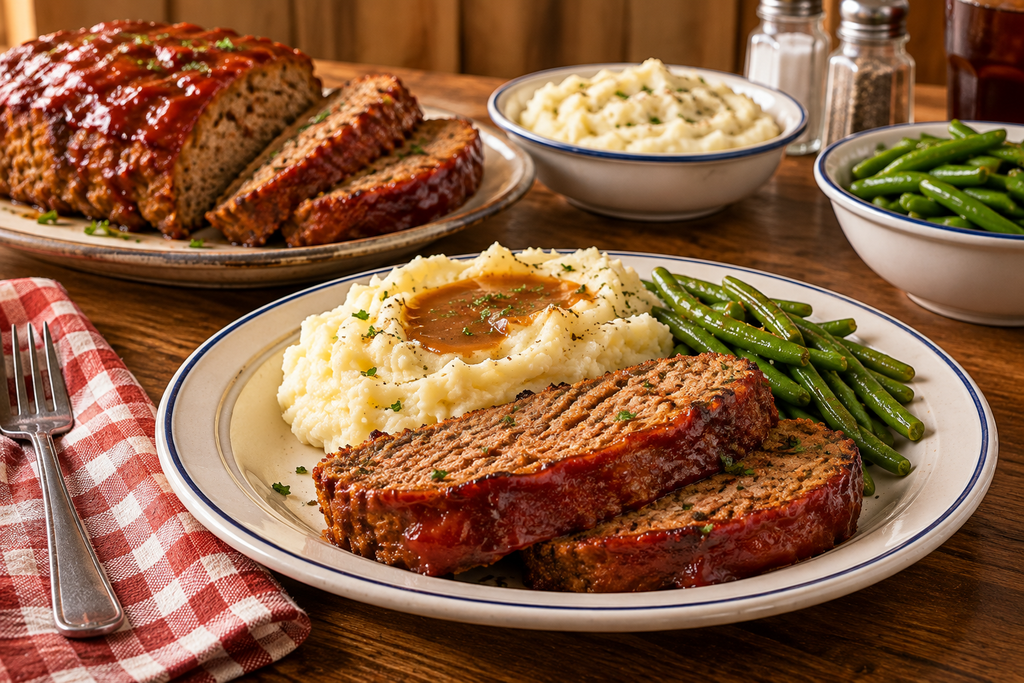
Few dishes capture the feeling of American home cooking quite like meatloaf. It is humble, filling, adaptable, and closely connected to memories of family dinners. A glazed loaf served beside mashed potatoes and green beans can feel just as familiar in a neighborhood diner as it does at a busy family table. Yet meatloaf’s journey to classic status is more complicated than its simple appearance suggests.
The story of American meatloaf involves European culinary traditions, immigrant communities, changing food technology, economic hardship, home economics, and the rise of convenience cooking. It also demonstrates how cooks transformed modest ingredients into meals that could feed several people. Over time, meatloaf moved from practical food to cultural comfort food, appearing in cookbooks, cafeterias, diners, television dinners, and modern restaurants.
European Roots and Early Influences
The basic idea behind meatloaf—combining ground or minced meat with other ingredients and shaping it into a loaf—is not unique to the United States. European cuisines developed many related dishes, including seasoned minced-meat preparations, meat puddings, and baked mixtures designed to make use of available ingredients.
In North America, one important influence was scrapple, a dish associated with German-American communities in Pennsylvania. Scrapple traditionally combines pork scraps with cornmeal and seasonings, producing a food that stretches meat and makes use of parts that might otherwise be wasted. Although scrapple is not identical to modern meatloaf, it reflects a similar practical approach: combine protein with grains and flavorings to create a filling meal.
American meatloaf developed gradually rather than appearing at one exact moment. Cooks adapted older traditions to local ingredients, household preferences, and new kitchen tools. By the late nineteenth century, recipes for baked mixtures made with ground meat, breadcrumbs, eggs, and seasonings began appearing in American cookbooks.
The Importance of Meat Grinders
The spread of mechanical meat grinders helped change how families used meat. Grinding made tougher cuts and leftover pieces easier to combine into a cohesive dish. It also allowed cooks to mix meat with bread, grains, onions, milk, eggs, and spices.
This method offered both texture and economy. Breadcrumbs or other fillers could help retain moisture, while vegetables and seasonings added flavor. The result was a dish that could be shaped, baked, sliced, and served to a group.
The growing availability of ground meat also made meatloaf easier to reproduce at home. Instead of requiring specialized butchering skills, the recipe could be assembled in an ordinary kitchen. This flexibility helped meatloaf fit into the expanding culture of American home cooking.
Meatloaf During the Great Depression
Meatloaf became especially useful during periods when families had to manage limited budgets. The Great Depression of the 1930s placed pressure on household food spending, and cooks looked for ways to make ingredients go further. Meatloaf was well suited to this environment because a relatively modest quantity of meat could be extended with breadcrumbs, oats, milk, eggs, onions, and other inexpensive ingredients.
Stretching meat did not necessarily mean sacrificing flavor. Seasonings, sauces, and vegetables could make the finished dish satisfying. Leftovers could also be sliced for sandwiches, making the meal useful beyond a single dinner.
The connection between meatloaf and thrift is important, but the dish should not be understood only as a symbol of poverty. Families have long adapted recipes for practical reasons, and many versions of meatloaf became treasured because of the care and creativity involved in preparing them. Economic necessity helped spread the dish, while taste and family tradition helped preserve it.
World War II and Practical Cooking
During World War II, food conservation and rationing encouraged households to think carefully about ingredients. Home economists, government campaigns, and cookbooks promoted economical meals that could provide nourishment while reducing waste.
Meatloaf fit the language of practical cooking. It could incorporate leftovers, use affordable fillers, and be prepared in a large pan. It was also easy to portion and serve with vegetables or potatoes. Recipes could be adjusted according to what a household had available.
This period strengthened the association between meatloaf and resourcefulness. The dish became a way to demonstrate that a home cook could create a comforting meal without relying on expensive ingredients. Its adaptable structure made it suitable for changing circumstances.
The Rise of the American Diner
The American diner helped establish meatloaf as recognizable comfort food outside the home. Diners traditionally offered familiar, filling meals at accessible prices, and meatloaf fit naturally into that menu. Served with mashed potatoes, gravy, vegetables, or a simple sauce, it provided a substantial plate of food for workers, travelers, and local customers.
Diner meatloaf often emphasized consistency and familiarity. Customers knew what to expect: a thick slice, a savory aroma, and side dishes that completed the meal. The dish could be prepared in advance, portioned efficiently, and reheated or served as needed.
The diner connection also influenced the visual identity of meatloaf. A glossy tomato-based glaze, brown gravy, and a neat slice became common associations. Although recipes varied widely, the diner version helped turn meatloaf into a shared American food reference.
The 1950s and Family Cookbooks
By the 1950s, meatloaf had become a regular feature in American home-cooking culture. Community cookbooks, newspaper recipe columns, and packaged food promotions offered many variations. Some recipes used ketchup, while others relied on tomato sauce, brown sugar glazes, mustard, or gravy.
The period also encouraged experimentation. Cooks added hard-boiled eggs, cheese, vegetables, bacon, or different seasonings. Some recipes were designed for special occasions, while others focused on speed and affordability.
Meatloaf’s popularity during this era was connected to the ideal of the family dinner. It could be baked in a single pan, served in generous portions, and accompanied by familiar side dishes. The meal was practical but could still feel celebratory when presented with care.
Why the Glaze Matters
The glaze is one of meatloaf’s most recognizable features. A mixture of ketchup, brown sugar, mustard, vinegar, or other ingredients creates a sweet, tangy coating that contrasts with the savory meat. It also adds color and helps the loaf develop an appealing surface during baking.
Not every meatloaf uses a glaze. Some versions are covered with bacon, served with mushroom gravy, or finished with a rich sauce. Still, the tomato-based topping became especially popular in American kitchens because it uses familiar pantry ingredients and creates a flavor profile that appeals to both children and adults.
The glaze also demonstrates meatloaf’s adaptability. A cook can make it sweeter, sharper, smokier, or spicier without changing the basic structure of the dish.
Regional and Family Variations
There is no single official American meatloaf recipe. Families often have their own preferred ratios of meat, filler, seasoning, and liquid. Ground beef is common, but mixtures of beef and pork can provide additional flavor and moisture. Ground turkey or chicken may be used for a lighter variation, although the texture and cooking requirements differ.
Breadcrumbs, crackers, oats, and cooked grains can all serve as binders or fillers. Onions, garlic, parsley, peppers, and herbs provide additional character. Some cooks use milk, broth, or eggs to help create a tender texture.
Side dishes also vary. Mashed potatoes and green beans are classic pairings, but meatloaf may be served with roasted vegetables, macaroni and cheese, cornbread, salad, or leftover slices in sandwiches. These combinations show how meatloaf can fit into different regional and family food traditions.
Meatloaf in Modern Restaurants
Although meatloaf is strongly associated with home cooking and diners, it has also appeared in contemporary restaurants. Chefs may use higher-quality meat, specialty sauces, caramelized onions, smoked ingredients, or creative garnishes. Individual portions may be served in skillets, while upscale versions may reinterpret the familiar loaf in a more refined format.
This restaurant presence does not replace traditional meatloaf. Instead, it shows how comfort foods can be reimagined without losing their recognizable identity. Diners may appreciate a classic slice because it reminds them of home, while restaurant guests may enjoy a version that introduces new textures and flavors.
The Emotional Meaning of Meatloaf
Meatloaf’s lasting popularity is not based only on nutrition or convenience. It is also connected to memory. Many people associate the dish with parents, grandparents, school lunches, Sunday dinners, or family gatherings. Its aroma may recall a kitchen from childhood, while leftovers may remind someone of packed lunches or casual sandwiches.
Comfort food is shaped by personal experience. One person may prefer a sweet ketchup glaze, while another remembers a version covered in gravy. A family recipe can carry stories about migration, budgeting, celebrations, and everyday care.
Meatloaf is therefore more than a mixture of ground meat and seasonings. It is a flexible platform for family identity and culinary memory.
Conclusion
From European minced-meat traditions and German-American scrapple to nineteenth-century cookbooks, Depression-era thrift, diner menus, and modern restaurants, meatloaf has followed a long path through American food history. Its success comes from its ability to be affordable, adaptable, filling, and emotionally familiar.
Meatloaf became an American classic because it answered practical needs while creating a sense of comfort. It could stretch ingredients during difficult times, feed a family at the dinner table, satisfy customers in a diner, and evolve in the hands of creative cooks.
Today, a slice of meatloaf served with mashed potatoes may look simple, but it carries generations of culinary adaptation. Its story reflects the broader history of American cuisine: a combination of inherited traditions, local ingredients, economic realities, technological change, and the enduring importance of sharing food at home.