Why Buffalo Wings Became One of America’s Most Popular Foods
The Buffalo Connection
Few American foods combine simplicity, bold flavor, and social energy as effectively as Buffalo wings. Crispy chicken pieces coated in a spicy, buttery sauce have become a familiar feature of sports bars, family gatherings, restaurant menus, parties, and game-day celebrations. Although the dish is now recognized across the United States and beyond, its history is closely tied to Buffalo, New York, where several competing stories describe how the modern wing tradition began.
The popularity of Buffalo wings is not based on flavor alone. Their rise reflects changes in restaurant culture, the growth of televised sports, the power of regional food identity, and the ability of a relatively inexpensive cut of chicken to become a highly desirable menu item. Buffalo wings also show how a local specialty can travel nationally while retaining a strong connection to its hometown.
From an Unwanted Cut to a Valuable Food
The word “Buffalo” in Buffalo wings refers to the city of Buffalo in western New York, not to the animal. The dish is generally associated with the Anchor Bar, a family-owned restaurant established by Frank and Teressa Bellissimo. The most widely repeated account places the creation of the modern Buffalo wing in 1964, when Teressa prepared chicken wings as a late-night snack for customers or friends of the family.
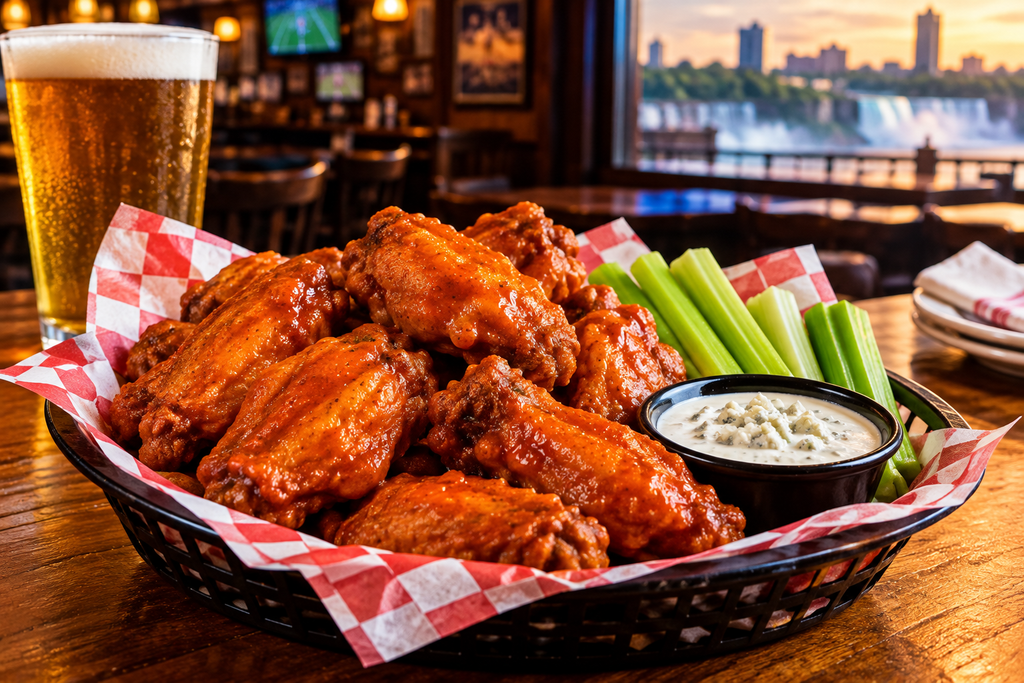
According to versions of the Bellissimo family story, the wings were cut into sections, deep-fried without a traditional breading, coated in a spicy sauce, and served with celery and blue cheese dressing. The combination was distinctive because the crisp chicken, hot sauce, cool dressing, and fresh celery created contrasting flavors and textures.
The precise details of the origin story remain debated. Different members of the Bellissimo family offered different explanations, including a mistaken delivery of wings and a request for a late-night snack. Historians have also emphasized the contribution of John Young, a Black Buffalo restaurateur who served whole, breaded wings with his own tomato-based mambo sauce during the 1960s. These accounts show that the history of Buffalo wings includes more than one culinary influence.
The Importance of Sauce
Buffalo sauce is central to the identity of the dish. A classic version commonly combines hot pepper sauce with butter, creating a mixture that is spicy, tangy, glossy, and rich. The butter softens the sharpness of the hot sauce while helping it cling to the fried chicken.
Restaurants have developed their own approaches to sauce. Some emphasize vinegar and heat, while others add garlic, honey, smoke, mustard, or additional spices. Menus often classify wings by heat level, from mild and medium to hot and extra hot. This system makes the dish accessible to a broad audience, including diners who enjoy the flavor of hot sauce but prefer less intense heat.
Celery, Blue Cheese, and Sports-Bar Culture
Celery and blue cheese dressing became part of the recognizable Buffalo wing presentation. Celery offers crunch and freshness, while blue cheese dressing contributes creaminess and a strong savory flavor. Ranch dressing is also widely served in many parts of the United States, but celery and blue cheese remain closely connected with the classic style.
Buffalo wings became especially successful because they fit the social environment of bars and sports-viewing venues. They are easy to share, can be eaten with the hands, and do not require a knife and fork. A large basket can be placed in the center of a table, allowing friends to eat while watching a game, talking, or celebrating.
National Expansion and New Variations
During the 1970s and 1980s, Buffalo wings spread from local restaurants to establishments in other American cities. Media coverage, restaurant expansion, and changing consumer tastes helped introduce the dish to wider audiences. Pizza companies and delivery services later helped make wings a familiar option for parties and casual meals.
Boneless wings, grilled wings, smoked wings, oven-baked wings, and plant-based alternatives demonstrate how the concept continues to evolve. Buffalo flavor has also moved into sandwiches, wraps, pizza, dips, salads, cauliflower, pasta, and snack foods.
A Symbol of Regional Pride
Buffalo wings remain an important part of Buffalo’s food identity. Local restaurants have their own techniques, sauces, and traditions, and visitors often seek out wing establishments as part of a culinary trip. Discussions about the origin of Buffalo wings also remind readers that food history can involve competing memories and overlooked contributors.
Conclusion
Buffalo wings became one of America’s most popular foods through a combination of regional creativity, practical cooking, restaurant entrepreneurship, media exposure, and social dining culture. Their journey from Buffalo bars to restaurants, delivery menus, supermarkets, and international food culture shows how American cuisine evolves. Their lasting popularity comes from a simple formula: crisp chicken, bold flavor, flexibility, and the ability to bring people together around a shared plate.
Suggested sources: Smithsonian Magazine, The Buffalo History Museum, HISTORY, Visit Buffalo, and historical reporting by Calvin Trillin in The New Yorker.
Leave a Reply