Discovering the Unique Flavors of Authentic New Orleans Cuisine
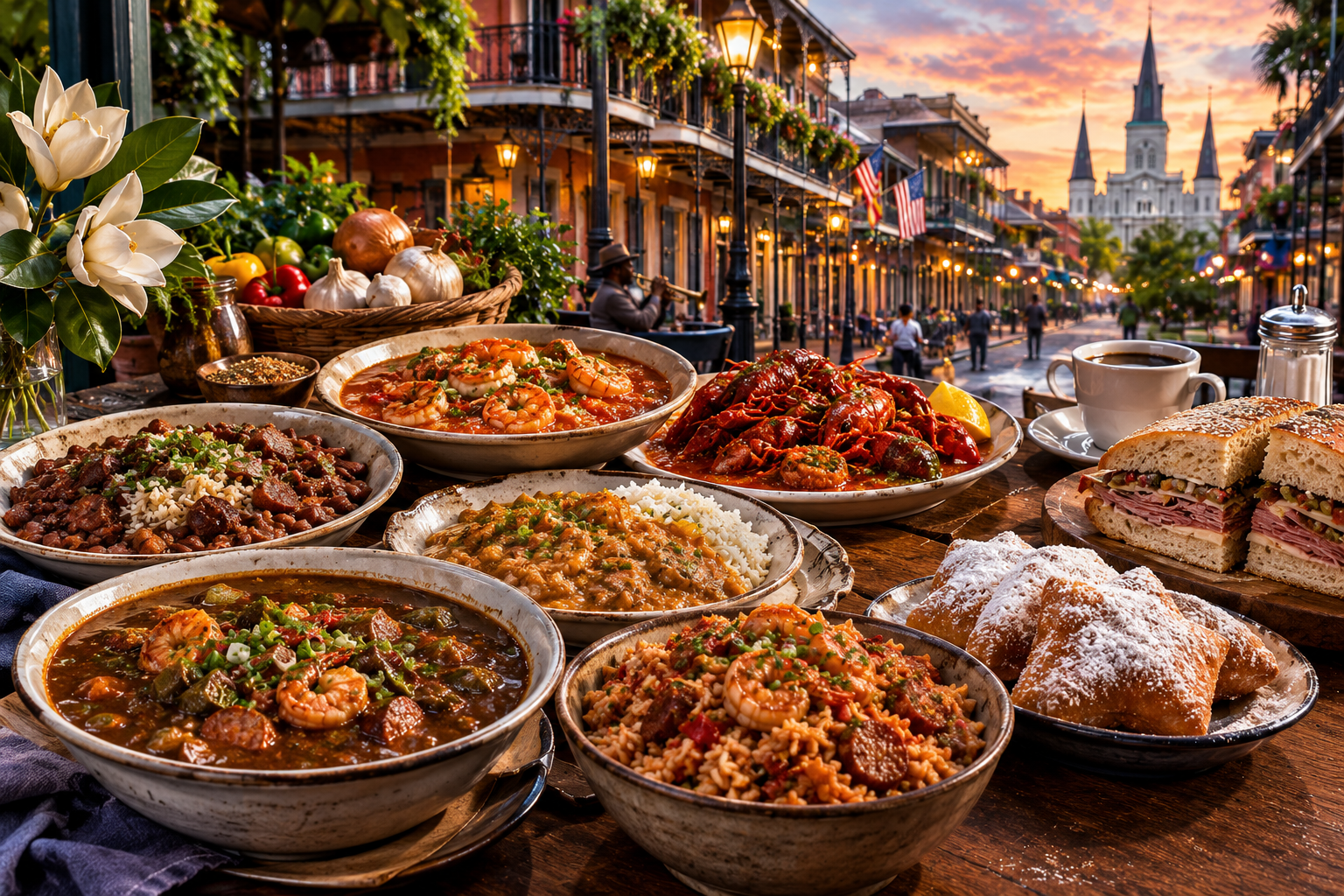
New Orleans is a city where food tells stories. Its cuisine is shaped by the Mississippi River, the Gulf of Mexico, historic markets, neighborhood restaurants, family kitchens, and generations of cultural exchange. A single meal may combine French cooking techniques, Spanish seasoning, West African knowledge, Caribbean influences, Native ingredients, and the seafood and rice of the Louisiana landscape. The result is a culinary tradition that feels both deeply local and remarkably global.
Authentic New Orleans cuisine is not defined by one recipe or one ethnic community. Instead, it is a living food culture that has evolved through migration, trade, adaptation, and creativity. Dishes such as gumbo, jambalaya, red beans and rice, shrimp Creole, crawfish étouffée, muffuletta, and beignets are widely recognized, but their deeper meaning comes from the people and histories behind them. To discover New Orleans food is to explore how communities turn available ingredients and inherited knowledge into dishes that express identity and belonging.
A Culinary Culture Built on Cultural Exchange
New Orleans developed as a major port city, bringing together people and ingredients from across the Atlantic world. French and Spanish colonial influences were important, but they were only part of the story. Indigenous communities, enslaved Africans, free people of color, Caribbean migrants, Italians, Germans, Irish immigrants, and later Vietnamese and Latin American communities all contributed to the city’s foodways.
The Smithsonian’s National Museum of American History emphasizes that Creole cuisine cannot be reduced to a purely European tradition. Its development involved West African, Caribbean, Latin American, Native American, and European influences. This history helps explain why New Orleans food is so varied and why the meaning of “Creole” has changed over time. Creole cuisine is better understood as a dynamic cultural process than as a fixed set of ingredients.
Local cooks historically worked with what the region offered: rice, seafood, okra, beans, shellfish, game, herbs, peppers, and vegetables. Imported spices and cooking methods were adapted to the climate and available resources. The city’s food became distinctive not because its influences remained separate, but because they interacted in kitchens, markets, restaurants, and homes.
Gumbo: A Bowl Full of History
Gumbo is perhaps the clearest example of New Orleans’s layered culinary identity. It is usually a richly seasoned stew served with rice, but its ingredients and preparation vary widely. Some versions include shrimp, crab, oysters, chicken, sausage, or combinations of meat and seafood. A gumbo may be thickened with a roux, okra, or filé powder, and each choice reflects a different set of regional and cultural practices.
The word “gumbo” is commonly connected to a West African term for okra. Okra itself has deep African culinary connections, while filé powder reflects the knowledge of Indigenous peoples in the region. Roux connects the dish to European cooking traditions, and rice highlights the agricultural history of Louisiana, including the expertise of enslaved Africans from rice-growing regions of West Africa.
Gumbo is more than a recipe because it demonstrates how cultural ingredients can become part of a shared local identity. Families often disagree about the ideal consistency, seasoning, or protein, yet these differences are part of the dish’s character. Gumbo is flexible, communal, and adaptable—qualities that mirror New Orleans itself.
Jambalaya and the Art of One-Pot Cooking
Jambalaya is another iconic dish that reflects the region’s practical and multicultural cooking traditions. It combines rice with ingredients such as sausage, chicken, seafood, onions, peppers, celery, herbs, and spices. The dish is often prepared in one pot, making it suitable for feeding a family or a large gathering.
Although jambalaya is frequently compared with Spanish paella, its development in Louisiana reflects a broader process of adaptation. Cooks used local ingredients and techniques to create a dish that could stretch across households and social occasions. The difference between Creole-style jambalaya, which commonly includes tomatoes, and Cajun-style versions, which may omit them, illustrates how neighboring food traditions can share a name while maintaining distinct identities.
Jambalaya also embodies the importance of rice in Louisiana cooking. Rice is not simply a side dish; it is often the foundation of the meal, absorbing seasoning and bringing different ingredients together. The result is hearty, aromatic, and designed for sharing.
Seafood and the Flavors of the Gulf
The Gulf of Mexico is central to New Orleans cuisine. Shrimp, crab, oysters, crawfish, and other seafood appear in soups, stews, fried dishes, sandwiches, and rice-based meals. Local seafood gives the cuisine a sense of place, while seasonings and cooking methods connect it to wider traditions.
Shrimp Creole, for example, often combines shrimp with tomatoes, onions, bell peppers, celery, garlic, herbs, and spices. The dish reflects the city’s ability to pair local ingredients with techniques influenced by multiple culinary cultures. Crawfish étouffée, meanwhile, typically features crawfish gently simmered in a seasoned sauce and served over rice. The French word “étouffée” refers to a cooking method associated with gently smothering or braising ingredients.
Seafood dishes also reveal the relationship between cuisine and environment. Coastal food traditions depend on seasonal availability, fishing communities, weather, and changing ecological conditions. Enjoying authentic New Orleans seafood therefore involves appreciating both culinary skill and the natural resources of the Gulf region.
Red Beans and Rice: Everyday Food with Cultural Meaning
Red beans and rice is often described as a simple comfort food, but its cultural significance is substantial. In many New Orleans households, it has long been associated with Mondays, when families could prepare beans slowly while handling other domestic tasks. The dish commonly includes red kidney beans, rice, onion, celery, bell pepper, herbs, and sometimes smoked sausage or pork.
The meal demonstrates how inexpensive ingredients can become deeply meaningful through repetition and family memory. Beans provide nourishment, rice extends the dish, and seasoning creates complexity without requiring luxury ingredients. The combination also reflects the African, Caribbean, European, and local influences that have shaped New Orleans food.
Red beans and rice became part of the city’s shared cultural vocabulary across racial and class boundaries. Jazz musician Louis Armstrong famously used the phrase “Red beans and ricely yours” in letters, further connecting the dish with New Orleans identity. Its importance lies not only in taste but also in routine, familiarity, and the emotional experience of eating something associated with home.
Muffuletta, Po’ Boys, and the City’s Sandwich Culture
New Orleans is also known for distinctive sandwiches. The muffuletta is associated with Italian American communities and typically features round bread, cured meats, cheese, and a marinated olive salad. Its flavor is built on contrast: salty meats, creamy cheese, tangy olives, herbs, and sturdy bread. The sandwich reflects the role of Sicilian immigrants in the city’s food economy and public markets.
The po’ boy has a different history and is often made with crusty French-style bread filled with fried seafood, roast beef, or other ingredients. It is commonly linked to working-class food culture and the tradition of creating a satisfying meal at an accessible price. Variations in fillings, sauces, and toppings are part of the sandwich’s continuing evolution.
Both sandwiches show how New Orleans cuisine incorporates immigrant influences while transforming them into local traditions. Over time, foods associated with particular communities can become recognizable symbols of the city as a whole.
Beignets, Chicory Coffee, and the Sweet Side of New Orleans
New Orleans cuisine is not only about savory stews and seafood. Beignets—square pieces of fried dough covered in powdered sugar—are closely associated with café culture and the French Quarter. They are often enjoyed with coffee, especially café au lait. The pleasure of a beignet comes from its contrast between crisp edges, soft interior, warm dough, and generous sugar.
Chicory coffee also has a distinctive place in the city’s culinary image. Chicory was historically used to stretch coffee supplies and became part of a regional flavor preference. Today, coffee and beignets represent more than breakfast or dessert; they are connected to tourism, public spaces, conversation, and the visual identity of New Orleans.
The Contributions of Black Chefs and Food Entrepreneurs
A complete understanding of New Orleans cuisine must recognize the contributions of African American cooks, chefs, caterers, restaurant owners, and food entrepreneurs. Their work shaped Creole cooking and helped preserve culinary knowledge during periods of racial segregation and limited economic opportunity.
Chef Lena Richard is an important example. According to the Smithsonian, she built a culinary enterprise during the Jim Crow era that included catering businesses, restaurants, a cooking school, and a frozen food company. Her 1939 cookbook was the first published cookbook featuring New Orleans Creole cuisine by an African American author. Richard’s career challenged narratives that treated Black culinary skill as mysterious or instinctive rather than as the result of training, knowledge, labor, and entrepreneurship.
Recognizing these contributions adds historical depth to familiar dishes. It also reminds diners that food traditions are shaped by people whose work may have been overlooked in older cookbooks and popular accounts.
Authenticity as a Living, Evolving Idea
Authenticity in New Orleans cuisine should not mean that every dish must follow one rigid formula. Food traditions change as families move, ingredients become available, chefs experiment, and communities interact. New Orleans has welcomed many groups over time, including Vietnamese immigrants whose food traditions are now part of the city’s broader culinary landscape.
A restaurant can respect tradition while introducing new techniques or ingredients. Likewise, a family recipe can change slightly from one generation to another and still remain meaningful. Authenticity is often found in the relationship between food, memory, technique, and community—not only in strict ingredient lists.
Conclusion: A City Served on a Plate
Authentic New Orleans cuisine is a celebration of complexity. Its flavors come from the meeting of cultures, the resources of the Gulf and river, the creativity of home cooks, the labor of professional chefs, and the memories of generations. Gumbo tells a story of cultural blending. Jambalaya demonstrates adaptability. Red beans and rice expresses everyday comfort. Seafood dishes connect the city to its environment, while muffuletta, po’ boys, beignets, and chicory coffee reveal the influence of migration, commerce, and public life.
To explore New Orleans food is to experience a cuisine that is historic but never frozen. It continues to absorb new influences while maintaining strong connections to place and community. Every bowl, sandwich, pastry, and cup of coffee offers an invitation to understand the city through its most generous language: food.
Sources and Further Reading
- Smithsonian National Museum of American History: New Orleans and Creole Cuisine
- Smithsonian National Museum of American History: Cajun and Creole Food Traditions
- Smithsonian: How Chef Lena Richard Became a Culinary Icon and Activist
- Smithsonian Folklife Festival: Louisiana’s Traditional Foodways
- National Museum of African American History and Culture: Black Foodways and Cuisine