Exploring the Regional Styles of American Pizza
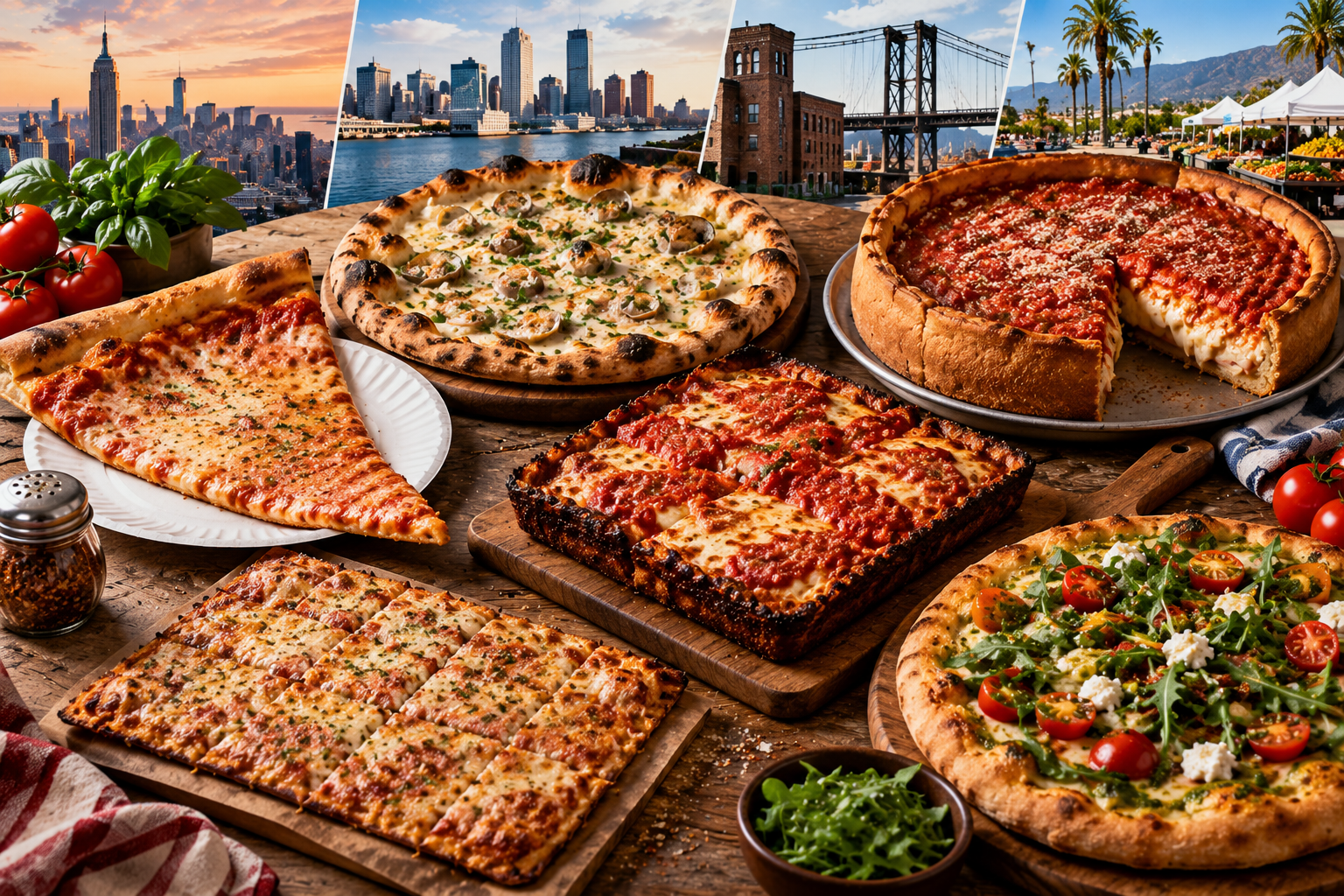
Pizza is one of the most recognizable foods in the United States, but there is no single definition of what American pizza should be. A wide, foldable New York slice, a deep Chicago pie, a square Detroit pizza, and a charred New Haven apizza can look and taste completely different while sharing the same basic foundation of dough, sauce, cheese, and toppings. Across the country, pizza has been adapted to local ingredients, ovens, business traditions, and eating habits.
The diversity of American pizza reflects the history of immigration and cultural exchange. Italian immigrants brought pizza-making traditions to American cities, but local cooks and entrepreneurs transformed those traditions in response to regional tastes and practical needs. Some pizzas became quick street foods, some were designed for taverns and family restaurants, and others developed through experimentation in modern kitchens. Exploring regional styles reveals that pizza is not simply an imported dish. It is an evolving part of American food culture.
Why American Pizza Became So Diverse
Pizza became increasingly popular in the United States during the late nineteenth and early twentieth centuries, particularly in communities with Italian immigrant populations. Early pizzerias often served food to local neighborhoods, where cooks used familiar methods while adapting to American flour, cheese, ovens, and customer expectations.
Geography played an important role. New York’s dense neighborhoods encouraged inexpensive slices that could be eaten quickly. Chicago’s restaurant culture supported a substantial, knife-and-fork pie. Detroit’s industrial background influenced the use of rectangular steel pans. New Haven’s Italian American community developed a distinctive coal-fired style with a thin, crisp crust. In California, chefs embraced seasonal ingredients and culinary experimentation.
These styles are not completely isolated. Pizza makers borrow techniques, consumers travel, and restaurants open in new cities. Still, regional traditions retain their own visual identity, flavor profile, and cultural meaning.
New York-Style Pizza: The Foldable Slice
New York-style pizza is perhaps the most widely recognized American pizza format. It is usually made as a large, round pie that is cut into broad triangular slices. The crust is thin in the center, crisp around the edge, and flexible enough to fold. This balance of structure and softness is one of its defining characteristics.
A traditional New York slice often includes tomato sauce, mozzarella, and a modest selection of toppings such as pepperoni, mushrooms, sausage, onions, or peppers. The crust commonly uses high-gluten flour, which helps create a chewy texture. High-temperature ovens brown the underside and produce a lightly blistered edge.
The slice format is central to the style’s cultural identity. Customers can buy one or two slices rather than ordering an entire pie, making pizza convenient for workers, students, tourists, and commuters. It fits the rhythm of New York City, where food is often eaten quickly and on the move.
New York pizza also reflects the growth of Italian American businesses. Early pizzerias served neighborhood communities, but the slice eventually became a symbol of the city itself. Today, New York-style pizza is found across the United States and around the world, although local interpretations vary in crust thickness, cheese blend, sauce, and toppings.
Chicago Deep-Dish: Pizza as a Complete Meal
Chicago deep-dish pizza is visually and structurally different from the New York slice. It is baked in a deep, round pan with a tall edge that holds substantial fillings. The crust is often buttery or rich, and the ingredients are layered in a way that protects the cheese from prolonged exposure to the oven’s heat.
In many classic versions, cheese is placed directly on the dough, followed by meat or vegetables, with tomato sauce spread over the top. This arrangement helps prevent the cheese from burning during the longer baking time required by the thick pie. The sauce may be chunky and generously seasoned, giving the pizza a character closer to a savory baked dish than a quick street-food slice.
Deep-dish pizza is commonly eaten with a knife and fork. Its substantial structure makes it filling, and one slice can function as a full meal. This format reflects Chicago’s restaurant culture and the city’s tradition of hearty, generous food.
It is useful to remember that Chicago has more than one pizza identity. The city is also known for thin-crust tavern-style pizza, which is often cut into small squares and designed for sharing. The contrast between deep dish and thin tavern pizza demonstrates the diversity within a single metropolitan area.
Detroit-Style Pizza: Crisp Edges and Industrial Roots
Detroit-style pizza is usually rectangular or square, with a thick yet airy crust and deeply caramelized edges. Cheese is spread close to the sides of the pan, allowing it to brown and crisp against the metal. Tomato sauce is often applied in stripes or dollops over the cheese after the pie is assembled.
The style is associated with the Motor City and became known for its use of rectangular steel pans. Food histories frequently connect these pans to industrial equipment and the city’s manufacturing culture, although specific origin stories can differ. What matters is the relationship between the pan, the dough, and the cooking method: the metal conducts heat efficiently and helps create a dark, crunchy perimeter.
Detroit pizza often uses Wisconsin brick cheese or similar blends that melt well and caramelize around the edges. The interior remains soft and substantial, creating a contrast between crisp cheese, tender dough, savory toppings, and bright tomato sauce.
In recent years, Detroit-style pizza has spread well beyond Michigan. Its strong visual appearance and distinctive texture have made it popular with independent restaurants and modern pizza makers. Even as it becomes more widely available, its connection to Detroit’s industrial history remains an important part of its identity.
New Haven Apizza: Char, Simplicity, and Tradition
New Haven-style pizza, often called “apizza,” is known for its thin, irregularly shaped crust and distinctive char. Traditionally cooked in coal-fired ovens, the pies may have dark spots and crisp edges while retaining a chewy center. The style developed in New Haven’s Italian American community, particularly around Wooster Square.
Compared with many other American pizzas, New Haven apizza may use less mozzarella. A plain version can feature tomato sauce, oregano, and grated hard cheese, while mozzarella is treated as an additional topping. One of the city’s most famous variations is white clam pizza, which combines clams, garlic, olive oil, cheese, and herbs.
The coal-fired oven is an important part of the style’s flavor. High heat creates charred surfaces and a dry, crisp finish. The pies are often irregular rather than perfectly circular, emphasizing the handmade character of the food.
New Haven pizza also demonstrates how regional pride can become part of a culinary tradition. Local pizzerias have developed strong identities, and residents often associate particular restaurants with family memories, neighborhood history, and city culture.
St. Louis-Style Pizza: Thin Crust and Square Cuts
St. Louis-style pizza is notable for its cracker-thin crust, which is traditionally made without yeast. The pizza is commonly cut into small squares or rectangles rather than triangular slices. This party-cut approach makes it easy to share and encourages diners to sample several pieces.
Another defining feature is the use of Provel, a processed cheese blend traditionally associated with the region. It melts smoothly and has a distinctive texture that differs from the mozzarella used in many other American styles. The combination of thin crust, sweet or seasoned sauce, and regional cheese creates a flavor profile that is immediately recognizable to local fans.
St. Louis-style pizza illustrates how regional food identity can be built around ingredients that are not widely used elsewhere. The style may be unfamiliar to people outside Missouri and nearby areas, but within its home region it represents a long-standing part of local restaurant culture.
California-Style Pizza: Creativity and Fresh Ingredients
California-style pizza is less strictly defined than styles such as New York or Detroit. It is often associated with thin or medium crusts, fresh seasonal ingredients, and unconventional combinations. Toppings may include goat cheese, arugula, artichokes, roasted vegetables, seafood, chicken, fruit, or sauces inspired by international cuisines.
The style became prominent through chefs and restaurants that treated pizza as a platform for culinary experimentation. Instead of limiting toppings to traditional pepperoni and mushrooms, California pizza makers explored farmers’ market produce, regional ingredients, and combinations drawn from Asian, Mexican, Mediterranean, and other food traditions.
California-style pizza reflects a broader interest in freshness, seasonality, and chef-driven menus. It can be lighter or more vegetable-focused, although there is no single nutritional profile. The style’s most important characteristic is its willingness to challenge expectations while retaining pizza’s basic structure.
Grandma Pizza and Other Northeastern Traditions
The Northeast contains several additional pizza traditions. Grandma pizza, associated especially with Long Island, is typically baked in a rectangular pan and has a relatively thin, crisp base. It may use a simple topping arrangement of tomato, mozzarella, garlic, and olive oil. Its appeal lies in its home-style character and efficient pan-baking method.
Greek-style or diner-style pizza is found in parts of New England. It is often baked in an oiled pan, producing a thicker, breadier crust with a crisp bottom. Despite its name, the style is not defined by Greek toppings such as feta and olives. Instead, the term refers to the history of Greek immigrant ownership in many regional diners and pizza shops.
These styles show that American pizza history cannot be reduced to the most internationally famous examples. Smaller regional traditions often survive through family businesses, neighborhood loyalty, and local preferences.
Toppings as a Reflection of Local Culture
Crust and baking method are important, but toppings also tell a regional story. In New Haven, seafood can appear in white clam pizza. In California, vegetables and creative sauces are common. In the Midwest, sausage, pepperoni, and hearty cheese blends are frequent choices. In many cities, local restaurants add barbecue meats, hot peppers, ranch dressing, or other ingredients that reflect contemporary tastes.
Toppings also reveal how pizza absorbs cultural influences. Ingredients introduced by immigrant communities can become familiar parts of local pizza menus. This process is not always historically simple, but it demonstrates how American food develops through adaptation and exchange.
Pizza, Community, and Regional Pride
Regional pizza styles are more than technical recipes. They are connected to neighborhoods, family businesses, sports events, celebrations, and personal memories. People may associate a particular pizza with childhood visits, late-night meals, college years, or gatherings with friends.
Regional pride can sometimes create playful arguments about which style is the most authentic. However, these debates are best understood as expressions of cultural attachment rather than objective measurements. A foldable slice, a deep-dish pie, a charred apizza, and a square Detroit pizza serve different eating experiences. Their differences are what make the American pizza landscape so interesting.
How American Pizza Continues to Evolve
American pizza is constantly changing. Contemporary pizza makers experiment with long fermentation, sourdough, wood-fired ovens, regional grains, plant-based cheese, and new topping combinations. Some restaurants revive older styles, while others create hybrid pizzas that combine techniques from multiple regions.
Technology and social media have also helped regional styles travel. A pizza that was once strongly associated with one city can now be found in restaurants across the country. This expansion can create new opportunities, but it also raises questions about authenticity and whether a style’s historical context is being preserved.
The future of American pizza will likely involve both preservation and innovation. Traditional pizzerias will continue to protect familiar methods, while new businesses will reinterpret pizza for changing diets, tastes, and markets.
Conclusion
Exploring the regional styles of American pizza reveals a food culture shaped by immigration, geography, technology, entrepreneurship, and local pride. New York offers the foldable slice; Chicago presents both deep dish and tavern-style pizza; Detroit is known for caramelized edges and rectangular pans; New Haven emphasizes char and simplicity; St. Louis highlights cracker-thin crust and square cuts; and California embraces seasonal creativity.
These styles are different, but they share a common story of adaptation. Pizza became American not by abandoning its origins, but by allowing communities to reshape it according to local resources and cultural preferences. Every regional pie represents a combination of inherited knowledge and new ideas. That is why American pizza remains one of the country’s most varied, recognizable, and continually evolving foods.
Leave a Reply