Why Barbecue Is More Than Food in American Culture
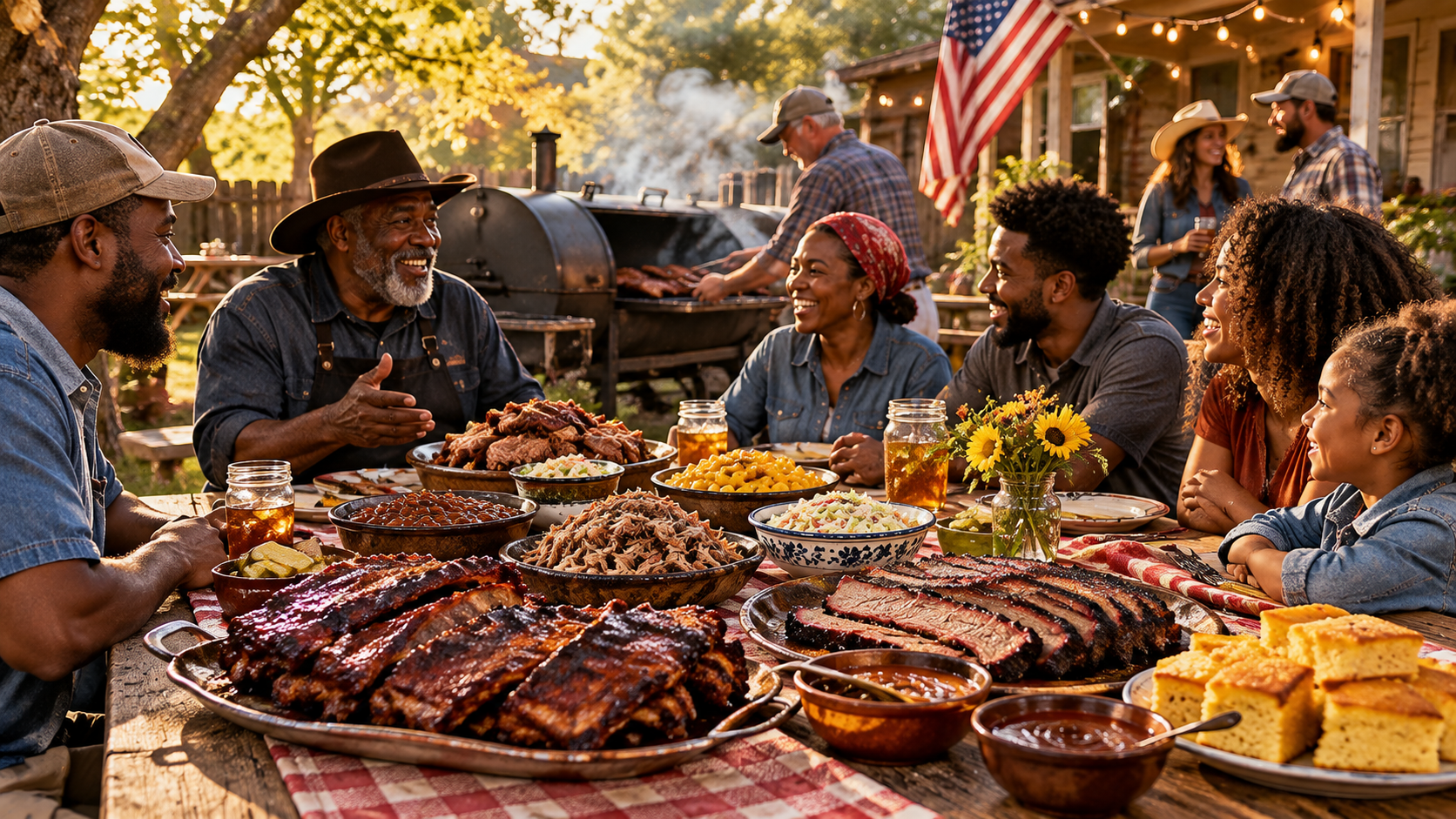
In the United States, barbecue is much more than a method of cooking meat. It is a social ritual, a marker of regional identity, a record of migration, and a way for families and neighbors to preserve memories. The smell of wood smoke drifting through a neighborhood can signal a celebration, a weekend gathering, a church fundraiser, a political event, or a family reunion. Behind every plate of ribs, pulled pork, brisket, or smoked chicken is a story about place, people, labor, and tradition.
American barbecue has developed into a broad cultural language. Different regions use different meats, woods, spices, sauces, and cooking methods, yet they share an emphasis on patience and communal experience. A barbecue pit requires time, attention, and knowledge. The finished meal is rarely eaten in isolation. It is usually sliced, passed around, discussed, compared, and remembered with other people. That social dimension helps explain why barbecue has such a powerful position in American culture.
Roots in Indigenous Knowledge and Cultural Exchange
The history of American barbecue begins long before modern restaurants, backyard smokers, or televised competitions. The term is commonly connected to Indigenous cooking practices in the Caribbean and the Americas. Indigenous communities developed ways to cook meat over or near controlled heat, including methods that helped preserve food and prevent direct flames from burning it. European colonists encountered these techniques and adapted them to their own ingredients, tools, and social settings.
Barbecue therefore emerged through cultural exchange rather than from a single inventor or community. Indigenous knowledge, European livestock practices, and African culinary expertise all contributed to the tradition’s development. Enslaved Africans and their descendants played an especially important role in shaping Southern foodways, including the preparation of pork and other meats, the management of fires, seasoning practices, and the organization of large communal meals.
Remembering these origins matters because barbecue is sometimes presented as a simple symbol of regional pride, detached from the complicated history of the people who created and maintained it. Its story includes creativity and celebration, but it also includes slavery, economic hardship, racial inequality, and the struggle to receive recognition for culinary labor. Understanding the full history makes the food more meaningful rather than less enjoyable.
Barbecue as a Regional Identity
There is no single American barbecue style. Instead, the country contains several major traditions, each shaped by local agriculture, migration, climate, and taste. Carolina barbecue is strongly associated with pork and sauces that may be vinegar-based, mustard-based, or tomato-based depending on the area. Memphis is famous for pork ribs and pulled pork, often emphasizing dry rubs as well as sauce. Texas is widely associated with beef brisket, direct attention to smoke and bark, and a variety of regional approaches. Kansas City barbecue is known for its broad selection of meats and a sweet, thick sauce.
These distinctions are not merely culinary preferences. They function as cultural signals. A person may identify strongly with the barbecue of their hometown or family, even when they enjoy other styles. Debates about the “right” sauce, the ideal wood, or the proper meat often express a deeper attachment to local history. Barbecue becomes a way of saying, “This is where I come from,” and “This is how my community does things.”
At the same time, regional traditions are never completely fixed. Restaurants move, families relocate, and cooks borrow ideas from one another. A pitmaster in one state may use techniques learned in another. New restaurants combine Texas smoking methods with Caribbean seasoning, Korean sauces, Mexican ingredients, or African spice blends. These changes do not necessarily erase tradition; they show that tradition is continuously interpreted.
The Importance of Time, Skill, and Labor
Barbecue is also a celebration of slow work. Smoking meat can take many hours, and the cook must monitor temperature, airflow, fuel, moisture, and timing. The process rewards experience more than speed. A skilled pitmaster learns to read the fire, understand the behavior of different cuts, and adjust to weather and equipment. Much of this knowledge is practical and passed down through observation, conversation, and repetition.
This labor has cultural value. In many communities, barbecue knowledge is inherited from parents, grandparents, mentors, and neighbors. Recipes may be written down, but important details are often communicated informally: how the smoke should smell, when the coals are ready, how the meat should feel, or when sauce should be added. These small decisions connect food preparation to memory and personal relationships.
Barbecue also reminds us that celebrated food traditions depend on labor that is not always equally recognized. Women, domestic workers, restaurant employees, farm workers, and community volunteers have all contributed to barbecue culture, even though popular images sometimes focus almost exclusively on the male pitmaster. A fuller cultural history includes the people who prepare side dishes, organize events, serve guests, clean equipment, manage businesses, and preserve family recipes.
Gathering, Hospitality, and Community
One of barbecue’s most important features is its ability to bring people together. A large piece of meat can feed a crowd, making barbecue practical for reunions, holidays, festivals, fundraisers, and neighborhood events. The meal often unfolds over several hours. Guests talk while the food cooks, children move between tables, and people exchange stories while waiting for the first slices to be served.
In this setting, barbecue becomes a form of hospitality. Offering someone a plate is a gesture of welcome. Asking whether they want sauce, more brisket, or another serving of beans creates a small moment of connection. Food is not simply consumed; it is used to establish relationships and reinforce belonging.
Historically, public barbecues have also been connected to civic life. Political gatherings, community celebrations, church events, and local fundraisers have used barbecue as a way to attract people and create a shared atmosphere. The Smithsonian’s food-history programming has documented how barbecue and outdoor cooking intersect with regional customs and even American political culture. This connection demonstrates that barbecue can operate as a social institution as much as a meal.
African American Contributions and Cultural Memory
African American communities have made foundational contributions to American barbecue, particularly across the South. Black cooks, pitmasters, entrepreneurs, and restaurant owners developed techniques, flavor profiles, and business traditions that helped barbecue become a nationally recognized cuisine. Yet their contributions have not always received equal attention in mainstream food narratives.
Barbecue’s cultural meaning is therefore connected to questions of visibility and ownership. Who is remembered as an expert? Whose restaurant becomes famous? Which stories are included in cookbooks, museums, television programs, and tourism campaigns? Recent scholarship and public history projects have worked to highlight Black barbecue professionals and the broader African American foodways that shaped American cuisine.
For many African American families, barbecue can also represent continuity. Recipes and cooking practices preserve connections to Southern communities even after migration to cities and other regions. The Great Migration helped spread Southern food traditions across the United States, allowing barbecue and related dishes to become part of new urban food cultures. In this way, barbecue carries both a sense of home and the experience of movement.
From Backyard Tradition to Commercial Culture
During the twentieth century, barbecue expanded through roadside stands, neighborhood restaurants, food trucks, festivals, and commercial brands. The growth of automobiles and highways made regional barbecue destinations accessible to travelers. Restaurant culture turned local techniques into recognizable culinary identities, while magazines, television, and later social media introduced new audiences to pitmasters and barbecue competitions.
Backyard cooking also became a major part of postwar American life. Suburban homes increasingly featured patios and grills, and outdoor cooking was marketed as a form of leisure and family recreation. This version of barbecue often differs from traditional low-and-slow smoking, but both practices share the idea that cooking outdoors can transform an ordinary meal into an event.
Commercialization has created opportunities for small businesses and regional tourism, but it has also raised questions about authenticity. When a local cooking tradition becomes a national brand, its history may be simplified for marketing. The challenge is to appreciate innovation while still recognizing the communities and workers who developed the original practices.
Barbecue in a Global and Changing World
American barbecue is no longer confined to the United States. Restaurants around the world serve smoked meats inspired by Texas, Carolina, Memphis, and Kansas City traditions. At the same time, American barbecue is being transformed by global culinary exchange. Cooks incorporate Korean gochujang, Jamaican jerk seasoning, Mexican salsas, Ethiopian spices, and other flavor traditions into smoked meat dishes.
This exchange reflects the changing nature of American identity itself. The United States has always been shaped by migration and cultural interaction. Barbecue demonstrates how a food can remain connected to its history while becoming something new in different hands. A fusion dish is not automatically a replacement for a traditional style; it can be a conversation between culinary communities.
Modern barbecue culture is also becoming more attentive to sustainability, health, and accessibility. Some cooks are experimenting with vegetables, mushrooms, fish, and plant-based proteins. Others are focusing on responsible sourcing, reducing waste, and using more efficient smokers. These developments show that cultural traditions can adapt to new concerns without losing their communal spirit.
Why Barbecue Continues to Matter
Barbecue endures because it connects several human needs at once. It provides nourishment, but it also creates anticipation. It expresses regional pride, but it also encourages exchange. It can be associated with competition, yet its most memorable moments often involve generosity and cooperation. The food requires technical skill, but the experience depends just as much on conversation and shared time.
To understand American barbecue is to understand a portion of American history: Indigenous knowledge, African American creativity, immigrant influence, agricultural change, industrial development, migration, entrepreneurship, and family memory. The smoke rising from a backyard grill may look simple, but it carries layers of meaning.
Ultimately, barbecue is more than food because it is a way communities tell stories about themselves. It brings the past into the present through flavor, technique, and gathering. Whether served at a roadside restaurant, a neighborhood festival, a family reunion, or a backyard table, barbecue continues to create a sense of place and belonging. Its deepest tradition is not a single sauce or cooking rule. It is the act of making something patiently and sharing it with others.
Sources and Further Reading
- Smithsonian Magazine: The Evolution of American Barbecue
- Robert F. Moss, Barbecue: The History of an American Institution
- Smithsonian National Museum of American History: Cooking Up History
- Smithsonian National Museum of American History: Backyard Cookout
- Smithsonian: Black Smoke and African American Barbecue History
Leave a Reply