From Southern Kitchens to the World: The Appeal of American Fried Chicken
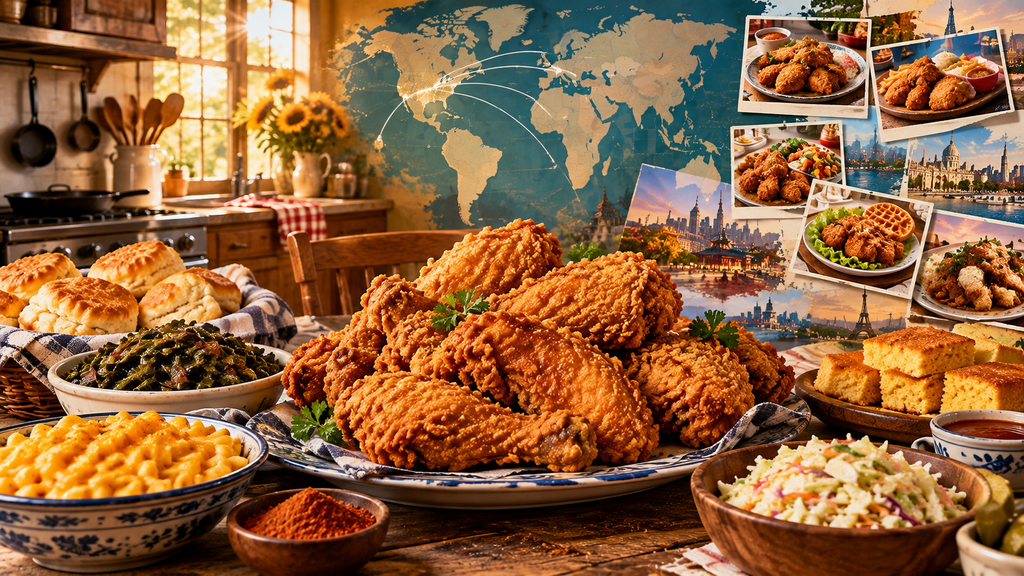
American fried chicken is one of the most recognizable comfort foods in the world. Its appeal seems straightforward: chicken is seasoned, coated, and cooked until the exterior becomes crisp while the meat remains tender and flavorful. Yet the dish carries a much deeper story. It reflects the foodways of the American South, the creativity and resilience of African American cooks, the growth of restaurants and food manufacturing, and the ability of culinary traditions to travel across borders.
Today, fried chicken can be found in neighborhood diners, family kitchens, food trucks, fast-food restaurants, upscale dining rooms, and international markets. It may be served with biscuits and gravy, waffles, hot sauce, rice, pickles, noodles, or sweet and spicy glazes. These variations demonstrate that fried chicken is not a fixed recipe. It is a flexible food that can preserve familiar techniques while adapting to local tastes.
More Than a Recipe: The Southern Foodways Behind Fried Chicken
Fried chicken is closely associated with the American South, but its history developed through cultural exchange. European immigrants brought poultry-raising and frying traditions, while African American cooks contributed seasoning knowledge, cooking techniques, and approaches to transforming modest ingredients into flavorful meals.
The Smithsonian’s National Museum of American History notes that the popularity of fried chicken in the South is deeply connected to the contributions of enslaved Africans and their descendants. Enslaved people were sometimes permitted to keep chickens, and some developed methods for seasoning and frying the birds. In certain circumstances, chicken could also become a source of personal income through market sales.
This history deserves to be understood with care. Fried chicken did not emerge from one individual or one isolated community. It developed through overlapping traditions shaped by unequal social conditions, agricultural work, household labor, entrepreneurship, and cultural creativity. The dish’s popularity today should not obscure the people whose knowledge helped shape it.
Why Frying Works So Well
Frying creates a combination of textures that is difficult to reproduce through other cooking methods. A properly prepared coating becomes crisp and deeply flavored, while the interior of the chicken retains moisture. The contrast between crunchy skin and tender meat is one of the dish’s defining attractions.
Many Southern-style recipes begin with seasoning the chicken before coating it. Some cooks use a buttermilk marinade, which can add tanginess and help the coating adhere. Others rely on dry brines, salt, pepper, paprika, garlic, onion powder, cayenne, or regional spice blends. The flour mixture may contain cornstarch, cornmeal, or other ingredients designed to increase crispness.
Temperature control is essential. Oil that is too cool can produce a greasy coating, while oil that is too hot may brown the exterior before the meat is safely cooked. Consistent cooking also requires attention to the size of the chicken pieces and the amount placed in the pan or fryer at one time.
Fried Chicken as a Family and Community Meal
In many Southern households, fried chicken became associated with Sunday dinners, reunions, celebrations, church events, and shared family meals. It was often served with side dishes that reflected local agriculture and household preferences. Common companions include collard greens, cornbread, mashed potatoes, biscuits, gravy, beans, macaroni and cheese, and coleslaw.
The meal is important not only because of its flavor but also because of the labor involved. Preparing fried chicken can require planning, seasoning, marinating, coating, frying, and cleaning. In family settings, recipes may be passed down through demonstration rather than written instructions. A particular blend of pepper, the preferred frying vessel, or the timing of each batch can become part of a family’s identity.
Food traditions are also shaped by migration. During the Great Migration, millions of African Americans moved from the South to northern and western cities. They carried cooking knowledge, ingredients, memories, and restaurant traditions with them. Fried chicken and other Southern foods consequently became more visible beyond the region where they had developed.
The Growth of Restaurants and Commercial Fried Chicken
The rise of commercial restaurants helped fried chicken reach wider audiences. Roadside cafés, lunch counters, diners, and specialized chicken restaurants turned a home-style dish into a product that could be purchased outside the household. Restaurant operators developed methods for preparing larger quantities while attempting to maintain flavor and consistency.
One of the most influential figures in this story was Harland Sanders, who later became known as Colonel Sanders. His restaurant business grew from serving meals in Kentucky to a franchised fried-chicken operation. The Smithsonian has described how Sanders used family-style meals, recognizable branding, and a standardized seasoning blend to build a major business.
The growth of Kentucky Fried Chicken, commonly known as KFC, helped establish a model for international restaurant expansion. Franchise systems made it possible to reproduce recognizable menus and branding across different regions. However, international success depended on more than copying a Southern menu. Companies had to adjust to local preferences, supply chains, regulations, and dining habits.
How Fried Chicken Became a Global Food
American-style fried chicken spread internationally through restaurant chains, cultural exchange, travel, media, and the global popularity of American brands. In many countries, customers encountered fried chicken through fast-food restaurants, but local cooks and businesses also developed their own interpretations.
Global adaptation often changes the flavor profile. Some markets prefer stronger chili heat, while others emphasize garlic, soy sauce, pepper, herbs, or sweet glazes. Side dishes may include rice, noodles, pickled vegetables, fries, flatbreads, or regional salads. Even the size of chicken pieces and the preferred balance between bone-in and boneless meat can vary.
This process demonstrates that globalization does not always create identical food experiences. A restaurant may carry an American name while offering a menu shaped by local demand. Consumers can recognize the basic concept of fried chicken but encounter a taste that belongs to the culture where it is served.
Korean Fried Chicken and Culinary Reinvention
Korean fried chicken is a notable example of how the fried-chicken format can be reinvented. The style is often associated with a thin, crisp coating and sauces such as soy garlic or sweet and spicy chili. Double-frying techniques are commonly used to produce a particularly crunchy exterior.
The Smithsonian’s Center for Folklife and Cultural Heritage describes Korean fried chicken as a transnational comfort food shaped by historical exchange, restaurant entrepreneurship, and changing consumer habits. In South Korea, fried chicken became connected with social occasions such as evenings with friends, sports viewing, celebrations, and delivery meals.
Korean fried chicken later gained popularity in the United States and other countries. Its international rise illustrates a two-way process: American food culture influenced the development of fried chicken in Korea, and Korean culinary innovation subsequently influenced food trends elsewhere. The result is not simply an American dish copied abroad, but a new style shaped by local history and creative adaptation.
The Role of Sauce, Spice, and Texture
Sauce has become one of the most important ways to distinguish modern fried-chicken styles. Traditional Southern fried chicken is often served without a heavy sauce, allowing the seasoning and crust to remain central. Other versions are tossed in buffalo-style hot sauce, honey butter, barbecue sauce, Korean chili glaze, garlic sauce, or citrus-based dressings.
Spice also plays a major role. Cayenne pepper and black pepper can create warmth in a Southern-style coating, while chili pastes and fresh peppers introduce different kinds of heat. Sweetness can soften the sharpness of spice, and acidity from pickles, vinegar, or citrus can balance the richness of fried food.
Texture remains equally important. Some diners prefer a rugged, heavily seasoned crust, while others favor a thin and delicate coating. The choice of flour, starch, marinade, frying method, and resting time can change the eating experience substantially.
Fried Chicken, Identity, and Representation
Because fried chicken is strongly associated with African American and Southern foodways, its commercial representation has sometimes raised questions about cultural ownership, stereotypes, and the visibility of the cooks who shaped the tradition. Food is never only about ingredients; it can also communicate social history and power.
A responsible discussion of fried chicken should recognize African American culinary contributions without reducing the cuisine to stereotypes. It should also acknowledge the work of home cooks, entrepreneurs, chefs, farmers, restaurant employees, and communities who preserved and developed the food over time.
Modern chefs and food historians increasingly explore Southern cuisine as a living tradition rather than a fixed collection of nostalgic images. This approach allows the history of fried chicken to include hardship, creativity, migration, innovation, and contemporary reinterpretation.
Health, Sustainability, and Modern Choices
Fried chicken is an indulgent food, and its nutritional profile depends on the cut, coating, oil, portion size, and side dishes. Some consumers choose smaller portions, remove excess coating, pair chicken with vegetables, or use oven-frying and air-frying methods. These approaches can change texture and flavor, but they reflect the desire to adapt familiar foods to modern routines.
Sustainability is another part of the conversation. Poultry production involves feed, water, energy, transportation, packaging, and labor. Consumers and businesses may consider sourcing, food waste, cooking-oil disposal, and supply-chain transparency when evaluating how fried chicken is produced and sold.
Restaurants are also experimenting with plant-based alternatives, new coatings, regional seasonings, and different cooking technologies. Such innovations do not replace traditional fried chicken, but they expand the number of ways people can engage with the format.
Why Fried Chicken Continues to Travel
Fried chicken has several qualities that support international popularity. It is recognizable, adaptable, relatively easy to portion, and compatible with many flavor systems. The basic cooking technique can be combined with local spices, sauces, side dishes, and serving customs.
It also works across different dining situations. Fried chicken can be a quick takeaway meal, a family platter, a party snack, a restaurant specialty, or a carefully prepared dish in a contemporary kitchen. Its ability to move between casual and premium settings helps it remain relevant.
Most importantly, fried chicken offers sensory satisfaction. The aroma of seasoning, the sound of a crisp crust, the contrast of textures, and the familiarity of a shared meal create an experience that is easy to understand even when the recipe changes from country to country.
Conclusion
From Southern kitchens to restaurants around the world, American fried chicken has traveled through a history of cultural exchange, African American culinary creativity, migration, entrepreneurship, industrial food production, and global adaptation. Its appeal comes from more than a crunchy coating. It is connected to family meals, regional identity, commercial innovation, and the human tendency to reinterpret familiar foods.
The worldwide popularity of fried chicken shows that culinary traditions can cross borders without remaining unchanged. Southern-style techniques have influenced international food cultures, while cooks in other countries have created new seasonings, sauces, textures, and serving customs. Korean fried chicken is one example of this dynamic exchange, but many other regional versions continue to emerge.
Ultimately, fried chicken remains popular because it is both familiar and flexible. It can preserve memories of home while welcoming new ingredients and ideas. Its story is a reminder that food traditions are living histories—shaped by people, carried across places, and continually renewed at the table.
Sources and Further Reading
- Smithsonian National Museum of American History: Chickens, Eggs, and the Changing American Diet
- Smithsonian Magazine: How Colonel Sanders Made Kentucky Fried Chicken an American Success Story
- Smithsonian Center for Folklife and Cultural Heritage: Korean Fried Chicken, a Transnational Comfort Food
- Smithsonian: What’s on Your Neighbor’s Table?
Leave a Reply