20th-Century American Favorites: Foods That Became National Icons
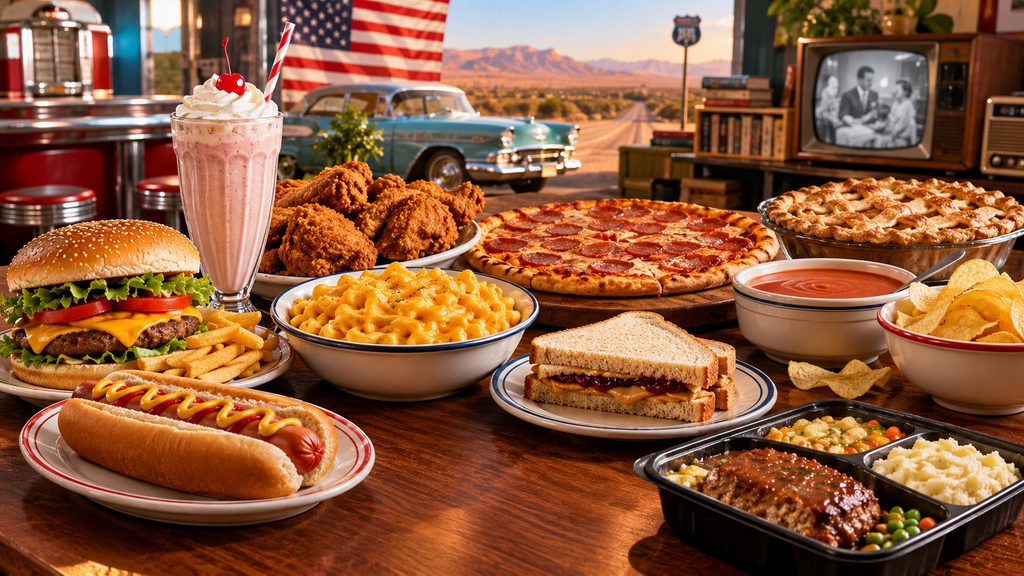
The 20th century transformed the way Americans produced, purchased, prepared, and enjoyed food. New transportation networks, refrigeration, supermarkets, advertising, television, fast-food restaurants, and changing family routines helped certain dishes move from regional favorites to widely recognized national icons. Burgers, hot dogs, pizza, fried chicken, apple pie, peanut butter and jelly sandwiches, macaroni and cheese, and television dinners became familiar symbols of American life.
These foods did not emerge from a single culinary tradition. American food culture was shaped by Indigenous foodways, African American cooking, European immigration, Latin American influences, Asian communities, industrial innovation, and regional creativity. Their national popularity often depended not only on taste but also on convenience, affordability, marketing, and the ability to adapt to different communities.
Hamburgers and the Rise of Fast Food
The hamburger became one of the most recognizable foods associated with the United States during the 20th century. Its basic format—a ground-beef patty served in a bun—was simple, portable, and easy to customize. Cheese, lettuce, tomato, pickles, onions, ketchup, mustard, and other toppings allowed restaurants and customers to create countless variations.
The growth of roadside dining and fast-food chains helped turn the hamburger into a national product. Standardized preparation, assembly-line techniques, recognizable branding, and quick service made it suitable for an increasingly mobile population. The hamburger could be eaten at a diner, drive-in, restaurant counter, sporting event, or family kitchen.
Its cultural importance extends beyond the sandwich itself. The burger became connected with postwar suburbia, automobile travel, youth culture, and the expansion of commercial food service. Today, it also appears in vegetarian, vegan, gourmet, regional, and international forms, demonstrating how a national icon continues to evolve.
Hot Dogs and the Culture of Public Gatherings
Hot dogs became closely associated with baseball games, fairs, picnics, street vendors, and summer celebrations. Their portability and relatively low cost made them suitable for large public gatherings. Served in a soft bun and topped with mustard, relish, onions, ketchup, or regional condiments, hot dogs are both convenient and highly adaptable.
Although the modern hot dog reflects European sausage traditions, its identity developed through American urban life and mass entertainment. Sporting venues and street-food businesses helped spread the product across the country. Regional preferences also became important: some cities emphasize particular toppings, bun styles, or preparation methods.
The hot dog’s national status comes from its role in shared experiences. It is often eaten while watching a game, attending a parade, grilling outdoors, or spending time with family and friends. Its meaning is therefore social as much as culinary.
Pizza Becomes an American Mainstay
Pizza arrived in the United States through Italian immigrant communities and gradually developed into a major part of American food culture. During the 20th century, pizzerias expanded beyond immigrant neighborhoods, while regional styles emerged in cities across the country.
New York-style pizza is often associated with large, foldable slices and a thin crust. Chicago is known for deep-dish interpretations, while other regions developed pan pizzas, thick-crust versions, and distinctive local toppings. Frozen pizza and national delivery chains further increased accessibility.
American pizza demonstrates how a food can retain connections to its origins while becoming something new. Toppings such as pepperoni, sausage, mushrooms, pineapple, and different cheeses reflect changing preferences and commercial creativity. Pizza is now found in school cafeterias, family restaurants, supermarkets, sports venues, and home kitchens.
Fried Chicken and African American Culinary Influence
Fried chicken became a national favorite through a history deeply connected to African American culinary knowledge, Southern foodways, and the development of commercial restaurants. Enslaved Africans and their descendants contributed seasoning practices, frying techniques, and food traditions that shaped the dish’s evolution.
During the 20th century, fried chicken moved from home kitchens and regional restaurants into national chains and packaged-food markets. Its appeal comes from contrast: a seasoned, crisp coating surrounds tender meat. Recipes vary in their use of brines, buttermilk, flour, spices, and frying methods.
The dish is often served with biscuits, mashed potatoes, gravy, greens, cornbread, or coleslaw. These combinations show how a single entrée can represent a larger regional meal. Fried chicken’s popularity should be understood alongside the histories of labor, entrepreneurship, segregation, migration, and cultural exchange that influenced American food businesses.
Apple Pie as a Symbol of Home
Apple pie became one of the most recognizable symbols of American home cooking, even though its pastry and fruit-pie traditions have older European roots. In the United States, apples were widely available, and pie-making became connected with family gatherings, holidays, community events, and seasonal cooking.
The classic preparation combines pastry, sliced apples, sugar, cinnamon, and sometimes nutmeg, lemon, or brown sugar. The filling offers sweetness and acidity, while the crust provides a buttery and flaky contrast. Apple pie may be served with ice cream, whipped cream, or a slice of cheddar cheese depending on regional and household preference.
Its national symbolism comes from emotional associations. Apple pie often represents hospitality, tradition, and an idealized sense of home. At the same time, its history reminds us that foods labeled “American” frequently emerge from international ingredients and cultural adaptation.
Peanut Butter and Jelly: The Everyday Sandwich
The peanut butter and jelly sandwich became a familiar American lunch through the increased availability of packaged bread, peanut butter, fruit preserves, and school-friendly meals. It requires no elaborate cooking and can be prepared quickly, making it especially practical for children, workers, and busy families.
The sandwich balances salty, nutty, sweet, and soft textures. Different breads, jams, jellies, nut butters, and spreads allow people to personalize it. Although it is often considered simple, its popularity illustrates the power of convenience and food manufacturing in shaping everyday diets.
Its cultural importance is connected with lunchboxes, school routines, road trips, and childhood memories. The sandwich is a reminder that national food icons are not always restaurant specialties; they can also be ordinary meals repeated across generations.
Macaroni and Cheese: Industrial Convenience and Home Tradition
Macaroni and cheese became a widely loved comfort food during the 20th century. Boxed versions made the dish easier to prepare, while homemade recipes continued to appear at family dinners, holiday tables, and community gatherings.
The dish combines pasta with a creamy cheese sauce, but variations are extensive. Cheddar, American-style processed cheese, Monterey Jack, and other cheeses produce different textures and flavors. Some cooks bake it with breadcrumbs or additional cheese, while others prefer a smooth stovetop preparation.
Macaroni and cheese reflects both domestic cooking and industrial food innovation. Packaged versions offered affordability and convenience, while homemade versions allowed families to preserve personal traditions. Its continued popularity demonstrates how Americans often combine commercial products with individual preparation methods.
Television Dinners and the Modern Food Industry
Frozen prepared meals expanded dramatically in the postwar period. Television dinners became symbols of convenience, technological progress, and changing household routines. Food could be portioned, frozen, transported, stored, and reheated with less preparation than a traditional meal.
The rise of frozen dinners was connected with improved refrigeration, packaging, supermarket distribution, and advertising. These products offered busy households a quick alternative to cooking from scratch. They also reflected changing ideas about leisure, work, family life, and modern appliances.
However, convenience foods generated debates about nutrition, packaging, labor, and the effects of industrial production. The history of television dinners therefore illustrates both the opportunities and the complications of modern food systems.
Breakfast Cereals and the Power of Branding
Packaged breakfast cereals became a major part of American food culture during the 20th century. Manufacturers used colorful boxes, memorable characters, promotional offers, and television advertising to appeal to children and adults. Cereals could be stored easily, served quickly, and marketed as part of a modern breakfast routine.
The category included corn flakes, puffed grains, sweetened cereals, granola-style products, and many other varieties. Branding played a central role in creating recognition and consumer loyalty. Cereal history also reveals changing public conversations about nutrition, sugar, vitamins, convenience, and marketing to children.
Even when cereal products differed greatly in ingredients and nutritional profiles, they shared a common place in the household: a fast and familiar start to the day.
Barbecue and Regional Identity
Barbecue became nationally visible while maintaining strong regional identities. Texas barbecue is often associated with smoked beef, Carolina traditions frequently emphasize pork and vinegar- or mustard-based sauces, and Kansas City-style barbecue is commonly linked with sweet, thick sauces.
The growth of highways, restaurants, food festivals, and television cooking programs helped regional barbecue styles reach wider audiences. Yet barbecue remains connected to local techniques, wood choices, cooking times, community gatherings, and family knowledge.
Its national popularity demonstrates that American food icons do not have to be uniform. A dish can become nationally recognized while preserving meaningful differences from one region to another.
How Technology and Advertising Changed Eating Habits
The 20th century food landscape was shaped by more than recipes. Refrigerators, freezers, microwave ovens, supermarkets, canning, improved transportation, and industrial packaging changed how food moved from producers to consumers. Advertising helped establish products as symbols of convenience, modernity, family care, or personal pleasure.
The Smithsonian’s food-history exhibition emphasizes how technology and social change transformed American eating after World War II. The Library of Congress also notes that cookbooks reveal shifts in markets, agriculture, nutrition, immigration, and household practice. Together, these perspectives show that popular foods are connected to broad historical forces.
Conclusion
The national icons of 20th-century American food culture were created through a combination of taste, memory, business, technology, and cultural exchange. Hamburgers and hot dogs became associated with mobility and public gatherings. Pizza and fried chicken reflected immigration, regional traditions, and adaptation. Apple pie represented home and nostalgia, while peanut butter and jelly captured everyday convenience. Macaroni and cheese, breakfast cereals, and television dinners demonstrated the relationship between home cooking and industrial food production.
These foods remain important because they continue to change. New dietary preferences, regional interpretations, global influences, and restaurant concepts keep familiar dishes relevant. Exploring their history makes it possible to appreciate not only what Americans eat, but also how food reflects identity, innovation, community, and the changing rhythm of everyday life.
Leave a Reply