The Story Behind America’s Beloved Hamburger and Its Global Rise
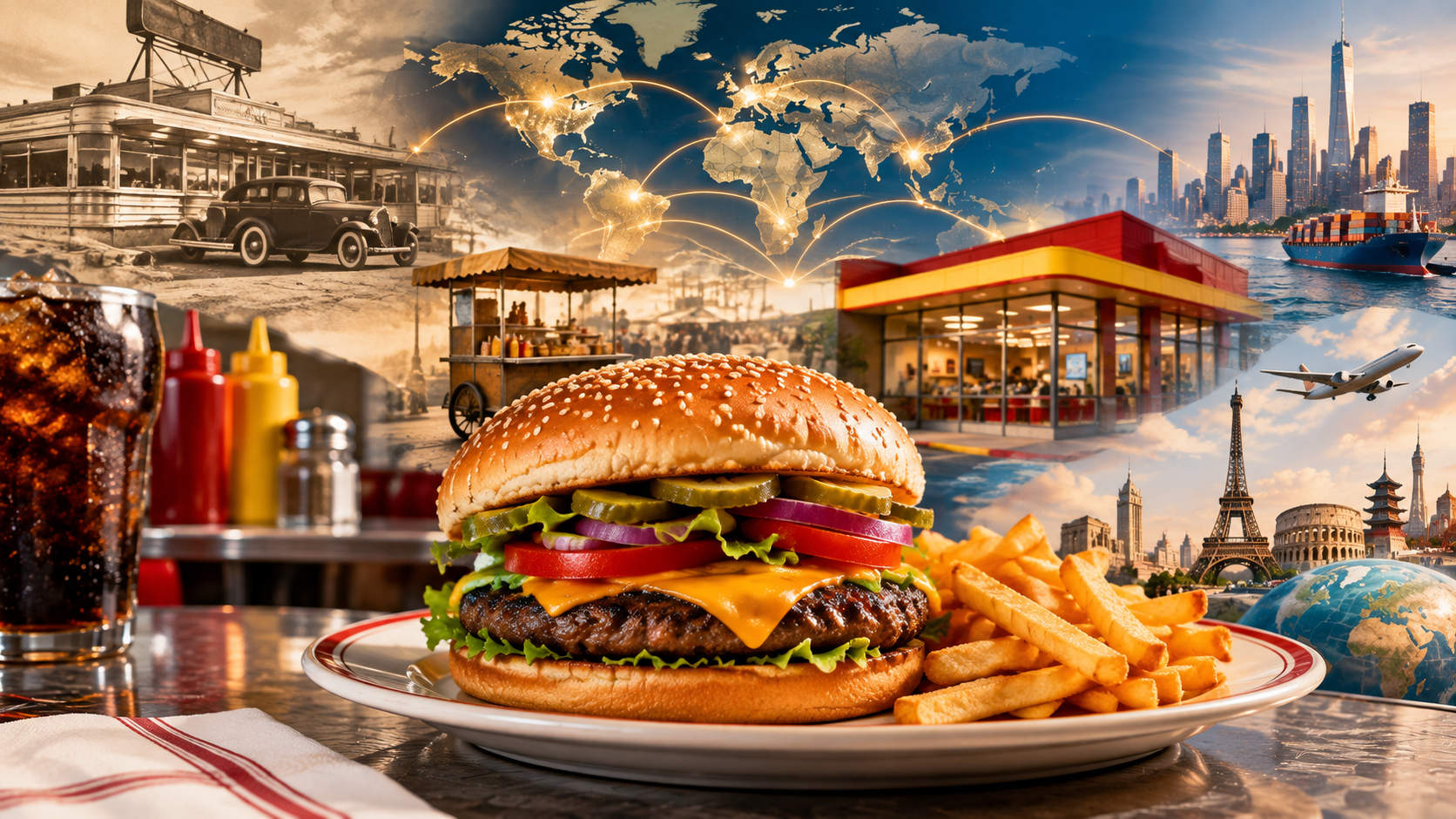
The hamburger is one of the most recognizable foods in the world. It appears on fast-food menus, in neighborhood diners, at backyard cookouts, in gourmet restaurants, and in home kitchens across many countries. Its basic structure is remarkably simple: a cooked patty, usually made from ground beef, placed inside a bun and finished with toppings or sauces. Yet behind this familiar combination lies a complicated story involving immigration, industrial technology, urbanization, advertising, entrepreneurship, and cultural adaptation.
Although the hamburger is strongly associated with the United States, its history did not begin in one clearly documented place or with one universally accepted inventor. The modern burger developed through several related traditions, including European preparations of chopped or ground meat and American practices of serving portable food at fairs, lunch counters, and roadside stands. Its rise shows how a modest meal can become a national symbol and eventually travel across borders.
Before the Modern Hamburger: Ground Meat Traditions
Long before the hamburger appeared in its modern form, people in different regions prepared meat by chopping, mincing, seasoning, or shaping it into patties. In German-speaking food culture, preparations associated with Hamburg helped popularize the idea of seasoned ground or chopped beef. These dishes were not necessarily served in a bun, and many resembled what modern diners might describe as a steak patty or Salisbury-style preparation.
During the 19th century, migration and transatlantic trade carried food traditions into the United States. American cookbooks and newspapers began to mention “Hamburg steak” and related dishes. The name connected the food with Hamburg, Germany, but the precise path from Hamburg steak to the modern hamburger remains uncertain.
Food history often develops through gradual adaptation rather than a single invention. Several cooks and vendors may have independently discovered that a ground-beef patty was easier to eat when placed between slices of bread. Because fairgrounds, train stations, lunch counters, and street stalls required quick and portable meals, the combination made practical sense.
The Role of Meat Grinders and Mass Production
Technology helped make the hamburger easier to produce. Mechanical meat grinders allowed cooks and food businesses to prepare ground meat more quickly and consistently than hand chopping or pounding. As grinders became more available through commercial catalogs and household equipment markets, ground meat could be used in a wider range of everyday recipes.
This development mattered because the hamburger depended on a particular texture. Ground meat could be shaped into uniform patties, cooked quickly on a griddle, and served to customers waiting in line. The growth of industrial meat processing and improved transportation also made beef more accessible to urban consumers.
By the late 19th and early 20th centuries, food vendors across the United States were experimenting with patties, bread, condiments, and portable serving methods. Claims about the first hamburger have been associated with different towns, fairs, restaurants, and individual vendors. Historians generally treat these claims carefully because many were recorded long after the alleged event or lack conclusive documentation.
Why the Bun Changed Everything
The bun was essential to the hamburger’s success. A patty served on a plate required a fork and knife, but a bun made it possible to eat while standing, walking, traveling, or attending an event. Bread also absorbed juices and sauces, creating a convenient package that could be held in one hand.
At fairs and festivals, portability was a major advantage. Visitors wanted food that could be eaten without interrupting entertainment or movement. The hamburger fit this need especially well because the patty could be cooked rapidly and topped according to customer preference.
The bun also created a recognizable visual identity. Once the sandwich became standardized, customers knew what to expect: a warm bread roll, a savory patty, and familiar toppings. This consistency helped the hamburger move from temporary food stalls into permanent restaurants.
White Castle and the Birth of the Hamburger Chain
One of the most important milestones in hamburger history was the establishment of White Castle in 1921. Founded by Walter Anderson and Billy Ingram, the company helped popularize the idea of mass-produced hamburgers served in a consistent restaurant environment.
White Castle’s approach responded to public concerns about the safety and quality of ground meat. Its restaurants used a highly controlled appearance and standardized preparation methods. The clean, white architectural style was part of the brand’s effort to present hamburgers as dependable and respectable rather than merely cheap street food.
The company also developed a system in which burgers could be prepared quickly and sold at low prices. Small square hamburgers, often called sliders, became associated with efficiency and affordability. White Castle helped establish the hamburger chain as a business model that other companies would later expand and modify.
McDonald’s and the Fast-Food Revolution
The hamburger’s national and international reach grew dramatically with the development of modern fast food. In the 1940s, Richard and Maurice McDonald reorganized their restaurant operation around speed, limited menu choices, standardized production, and self-service principles. The system emphasized repeatability: customers could receive a familiar product at a predictable price and pace.
Ray Kroc later helped expand McDonald’s through franchising. The franchise model allowed the brand to grow across regions while maintaining common procedures, packaging, visual design, and menu expectations. This approach changed the restaurant industry by making operational consistency a central part of expansion.
Fast-food chains benefited from postwar economic growth, automobile ownership, suburban development, television advertising, and the construction of new roads. Drive-in restaurants and roadside locations made hamburgers convenient for families, workers, and travelers. The burger became linked with mobility and modern consumer culture.
Advertising and the Creation of a National Icon
The hamburger’s popularity was not based on taste alone. Advertising helped turn it into a symbol of American lifestyle. Restaurants promoted speed, value, freshness, family enjoyment, and customization. Bright signs, memorable logos, packaging, mascots, and television commercials made hamburger brands recognizable across large geographic areas.
Advertising also helped standardize the way people imagined a hamburger. Images often showed a carefully stacked bun, a thick patty, melted cheese, crisp lettuce, tomatoes, pickles, and glossy sauces. The real product could vary, but the visual promise remained powerful.
As the hamburger became associated with American culture, it also appeared in films, television programs, cartoons, music, and political or social commentary. It could represent convenience, abundance, youth culture, mass production, or debates about nutrition and corporate influence.
Regional American Burger Styles
Despite the influence of national chains, American hamburger culture has never been completely uniform. Regional restaurants and independent cooks developed their own techniques and combinations.
Some burgers are cooked on flat-top griddles, where the patty develops a browned crust. Others are grilled over charcoal or gas, adding smoky notes. Thin patties may be pressed firmly against a hot surface, while thicker patties are cooked more gently to preserve juiciness. Toppings also vary, from simple onions and mustard to chili, bacon, fried eggs, regional cheeses, or specialty sauces.
In many places, the burger is a reflection of local identity. A diner may become known for a particular seasoning blend, bun, relish, cooking method, or serving style. These regional differences keep the hamburger from becoming a completely standardized food.
The Burger Goes Global
The hamburger began its international rise through American cultural influence, tourism, franchising, global trade, and the expansion of multinational restaurant companies. Fast-food chains established locations in Europe, Asia, Latin America, the Middle East, Africa, and Oceania. The burger’s format was easy to recognize, but menus often changed to suit local tastes and regulations.
International adaptations may include different sauces, cheeses, vegetables, spices, bread styles, and protein choices. In some markets, restaurants offer chicken, fish, plant-based, or vegetarian patties. In others, beef burgers are paired with locally familiar seasonings or side dishes.
This process is not simply a one-way export of American food. Local consumers, chefs, and restaurant operators reinterpret the hamburger. The result is a global food category with many regional identities. A burger in one country may taste very different from a burger in another while retaining the same basic structure.
Gourmet Burgers and the Premium Movement
During the late 20th and early 21st centuries, the hamburger also entered the premium restaurant market. Chefs began experimenting with specialty beef, brioche buns, artisan cheeses, house-made pickles, caramelized onions, truffle sauces, and unusual toppings.
The gourmet burger movement challenged the idea that hamburgers were only inexpensive fast food. Restaurants presented burgers with more elaborate ingredients and higher prices, sometimes emphasizing sourcing, cooking technique, and presentation. At the same time, independent burger shops continued to celebrate simple, affordable preparations.
Premiumization has created a broad spectrum. Consumers can choose a basic fast-food burger, a regional diner-style sandwich, a food-truck creation, or a carefully designed restaurant version. The burger’s adaptability is one reason it has survived changing food trends.
Health, Sustainability, and New Alternatives
The hamburger has also become part of discussions about nutrition, agriculture, environmental impact, and food technology. Beef production requires land, water, feed, and energy, and its environmental impact depends on farming practices, supply chains, and production systems.
In response, restaurants and food manufacturers have developed plant-based patties made from ingredients such as peas, soy, wheat, mushrooms, beans, and other plant proteins. These products aim to reproduce some of the texture and flavor associated with beef while offering alternatives for vegetarian consumers and people seeking to reduce meat consumption.
Traditional beef burgers have also evolved through portion control, leaner blends, vegetable toppings, whole-grain buns, and different cooking methods. These changes demonstrate that the hamburger is not a static product; it continues to respond to public concerns and consumer preferences.
The Hamburger as Cultural Exchange
The global hamburger story illustrates how food moves through cultural exchange. Its ingredients and preparation methods reflect multiple histories, while its commercial expansion was accelerated by American business systems and popular culture. Once introduced to new markets, the burger was adapted by local cooks and customers.
This makes the hamburger a useful example of globalization. It can represent standardization because major chains sell recognizable products around the world. It can also represent localization because restaurants modify flavors, menus, portion sizes, and ingredients to fit the communities they serve.
The burger’s story is therefore not only about a sandwich. It is about migration, technology, labor, branding, consumer choice, and the ability of food to cross borders while changing meaning.
Conclusion
The beloved hamburger developed through a long process rather than one clearly documented invention. Ground-meat traditions, mechanical grinders, portable bread, food vendors, restaurant chains, advertising, and franchising all contributed to its rise. White Castle helped establish mass-produced burgers as a dependable commercial product, while McDonald’s and other chains expanded the fast-food model across the United States and beyond.
Today, the hamburger exists in countless forms, from inexpensive sliders and classic diner burgers to gourmet creations and plant-based alternatives. Its global popularity comes from a combination of convenience, flexibility, recognizable structure, and cultural adaptability.
Ultimately, the hamburger’s story is a reminder that iconic foods are rarely simple in their origins. Behind every bun and patty is a history of people, movement, invention, business, and changing tastes. That complexity is precisely what has allowed the hamburger to remain one of the world’s most enduring and adaptable foods.
Leave a Reply